$39.99 $0.89/serving
View Profile You must be at least 18 years old to enter this site.
This is a legal, non-psychoactive functional mushroom guide. Talk with your clinician first if you take blood thinners, diabetes medications, immune-modulating drugs, or are in cancer treatment.
Best supplement form
Compare products that match the form most often recommended for Poria.
Evidence summary
2 cited references reviewed for the Poria guide.
For healthy aging
See how Poria compares with Reishi, Chaga, and Turkey Tail for older adults.
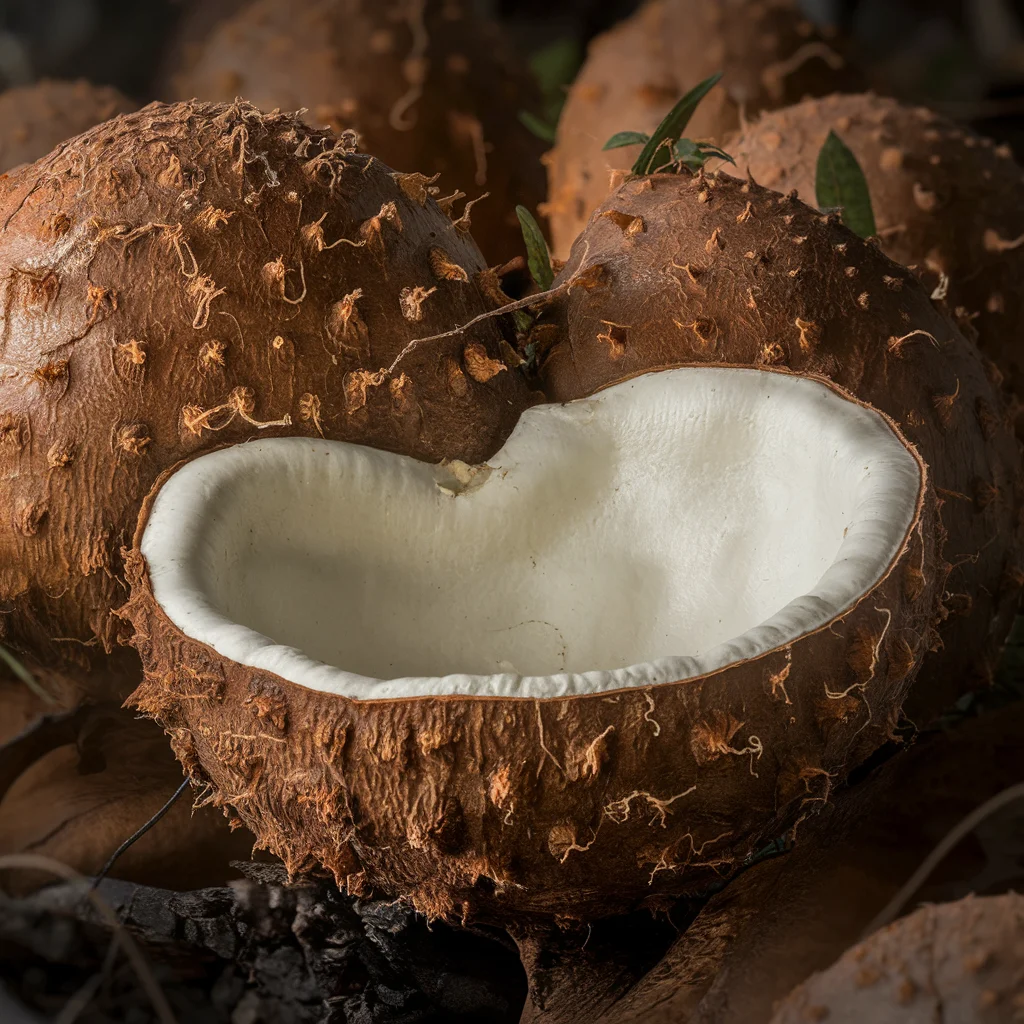
Wolfiporia extensa (syn. Poria cocos, Macrohyporia extensa) is a wood-decay fungus in the family Polyporaceae that forms large, subterranean sclerotia on the roots of pine trees (Pinus spp.) in warm, temperate regions of North America and East Asia. The sclerotium — the medicinally used part — is a compact mass of hardened mycelium that can weigh several kilograms, with a rough, dark brown exterior and a white, starchy interior. Known as Fu Ling in Traditional Chinese Medicine (TCM), it is one of the most prescribed medicinal mushrooms in the Chinese pharmacopoeia, documented in the Shennong Ben Cao Jing (circa 200 CE). Key bioactive constituents include pachymic acid and other lanostane-type triterpenoids with anti-inflammatory and anti-tumor activity, along with beta-glucan polysaccharides demonstrating immunomodulatory, diuretic, and sedative properties.
#22
Popularity Rank
Moderate
Research Level
2
References
4
Key Compounds
Independent Research Review · Last Reviewed May 3, 2026
Poria (Wolfiporia extensa) is a functional mushroom with a moderate level of scientific research supporting its use. Its primary bioactive compounds - Pachymic Acid, Triterpenoids, Beta-Glucans, and 1 others - have been studied for benefits including digestive health, calming & anti-anxiety, immune support, fluid balance. Several preclinical studies and initial human trials support these uses, though additional clinical research is ongoing. Poria is ranked #22 in popularity among functional mushroom species, with 2 cited research references in our database. The most commonly recommended form is poria cocos extract or tcm formula from a tested supplier. Typical supplemental dosages range from 500 mg to 3,000 mg per day depending on extract concentration and intended use.
Buyer decision guide
Use this section to compare evidence strength, active compounds, researched forms, and safety limits for poria.
Poria cocos research shows preclinical and animal-model support for glucose-lipid metabolism, renal function, and gut-barrier protection. Human clinical evidence remains limited. A 2023 Korean study reported subjective insomnia-symptom improvements with extract use. Polysaccharides and pachymic acid are the primary active compounds under investigation.
Poria's core bioactive components are polysaccharides (PCPs), triterpenoids, and pachymic acid (PA). Animal studies show pachymic acid activates the Nrf2/GPX4 antioxidant pathway and reduces ferroptosis in kidney tissue. Polysaccharides modulate gut microbiota and inflammatory markers (TNF-α, IL-1β, IL-6) in colitis models. Human mechanistic studies are absent.
Aqueous extracts and polysaccharide isolates dominate published research, while traditional dried sclerotia and decoction-style preparations are supported mainly by historical use. No comparative human trials distinguish extract potency, standardization, or optimal form, so labels should be judged by identity testing and disclosed extraction method.
No serious adverse events reported in available research or clinical databases. Traditional use spans over 2,000 years with no documented toxicity alerts. Formal safety trials in humans are absent. Individuals with immune-suppression conditions, kidney disease, or those taking immunosuppressive medications should consult a healthcare provider before use.
Poria has moderate research support with several preclinical studies and some human trials. More research is needed to confirm benefits.
Poria — known as Fu Ling in Chinese medicine — is not what most people picture when they think of a mushroom. Instead of a cap and stem, Poria forms a large, underground mass called a sclerotium that...
Poria has been used in traditional medicine systems for centuries, particularly in Traditional Chinese Medicine (TCM) and other Asian healing practices.
Historical Context: Traditional use does not guarantee efficacy or safety. Modern research is ongoing to validate traditional claims.
Poria — known as Fu Ling in Chinese medicine — is not what most people picture when they think of a mushroom. Instead of a cap and stem, Poria forms a large, underground mass called a sclerotium that grows on the roots of pine trees. It looks like a dark brown, rough-skinned coconut on the outside, with a white, starchy interior that has been sliced, dried, and used in Traditional Chinese Medicine for over 2,000 years. It is one of the most commonly prescribed ingredients in the entire Chinese herbal pharmacopoeia.
People turn to Poria primarily for digestive comfort, anxiety relief, and better sleep. In TCM, it is classified as a Qi tonic that drains dampness — which in practical terms means it has been used to reduce bloating, water retention, and digestive discomfort. Its calming properties have made it a go-to ingredient in traditional formulas for insomnia and anxiety, often combined with other calming herbs. Modern research has identified triterpenoids like pachymic acid that may explain these sedative and anxiolytic effects.
Historically, Poria holds an almost unmatched pedigree in Asian medicine. It appears in the Shennong Ben Cao Jing, one of the oldest known herbal texts (circa 200 CE), where it is listed as a superior herb — meaning it was considered safe for long-term use and beneficial for overall vitality. Chinese emperors reportedly consumed Poria regularly as a longevity tonic. It remains a key ingredient in many classical TCM formulas still prescribed today, including Si Jun Zi Tang (Four Gentlemen Decoction) for digestive weakness.
In supplement form, Poria is available as capsules, powders, and tinctures. Hawaii Pharm (already represented in the Shroomaps brand database) sells dedicated Fu Ling tinctures. It also appears in many multi-mushroom and TCM-inspired supplement blends. Typical dosages range from 500 mg to 3,000 mg per day of dried extract. The mushroom is also used in traditional Chinese cooking — Poria cakes and Poria tea are popular in southern China.
When shopping for Poria supplements, look for products that specify whether they use the whole sclerotium or the inner white portion (called Fu Ling) versus the skin (called Fu Ling Pi), as different parts have slightly different properties. Hot water extraction is the standard method for polysaccharide-rich extracts, while alcohol extraction captures more of the triterpenoid compounds. Dual extraction products offer the broadest spectrum of benefits.
Poria combines well with other calming mushrooms and adaptogens. Pairing it with reishi for a comprehensive relaxation stack is a classic combination in TCM. It also works well alongside ashwagandha or passionflower for sleep support. For digestive applications, combining Poria with ginger and licorice root follows traditional TCM formulation principles. While Poria may not have the name recognition of lion's mane or reishi in Western markets, it is arguably one of the most time-tested and well-documented medicinal mushrooms in human history.
Products containing Wolfiporia extensa extracts, with emphasis on verification, format, and practical daily use.


Personalized dosage recommendations based on your experience level, body weight, and goals.
Independent Research Review
The editorial team reviews mushroom encyclopedia entries for sourcing, clarity, safety caveats, and citation support.
Last reviewed: May 3, 2026
Click anywhere or press Escape to close