
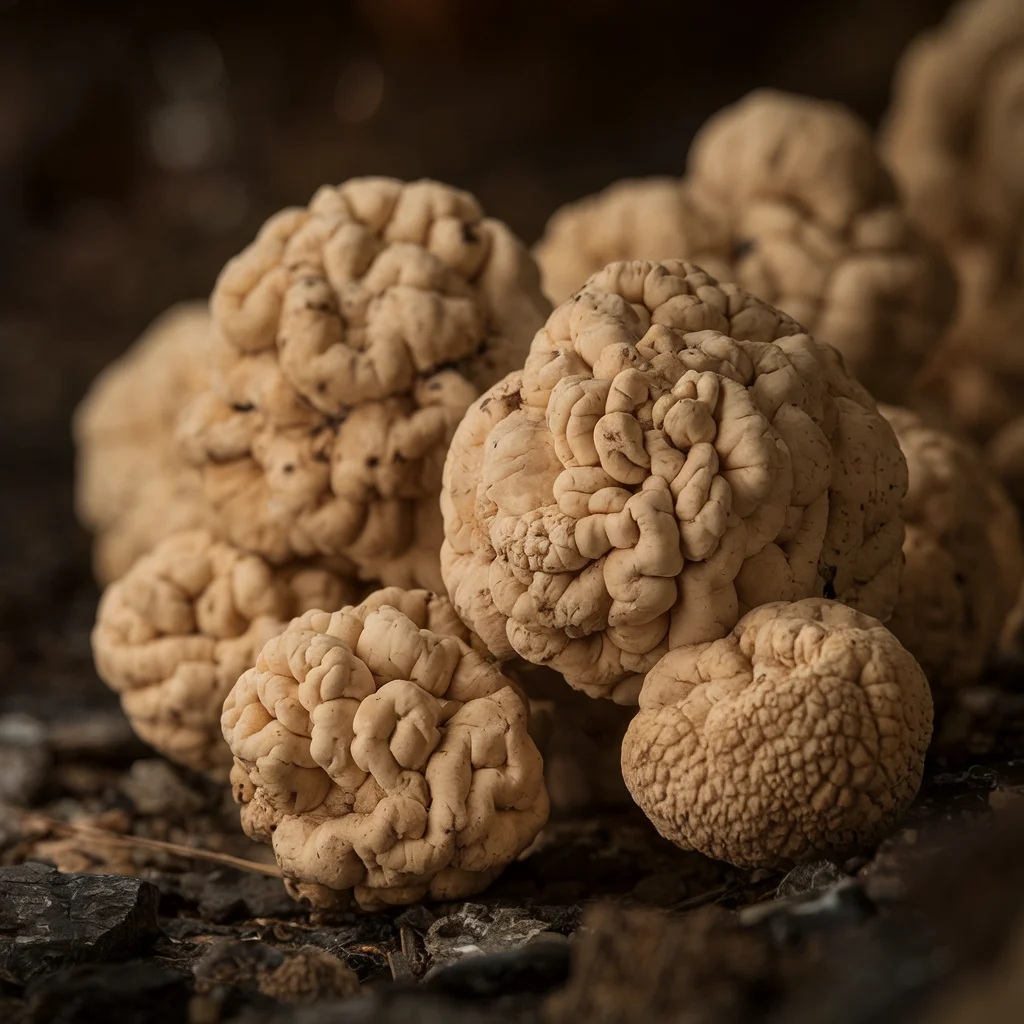
Psilocybe galindoi is a sclerotia-producing psilocybin mushroom of the family Hymenogastraceae, closely related to Psilocybe tampanensis. Native to Mexico, it was first described by Guzmán in 1983 from specimens collected in Jalisco. Like P. tampanensis, P. galindoi produces underground sclerotia (commonly marketed as 'truffles' or 'philosopher's stones') that contain psilocybin and are legally sold in Dutch smartshops under the name 'Pajaritos' (Spanish for 'little birds'). The sclerotia are small, dense, irregularly shaped masses with a dark brown exterior and lighter interior, containing moderate psilocybin concentrations that place them in the mild-to-moderate potency range — typically positioned between Mexicana (mildest) and Tampanensis in the Dutch truffle potency hierarchy. P. galindoi truffles are popular as an introductory psilocybin product for first-time users seeking a gentle, manageable experience.
#34
Popularity Rank
Limited
Research Level
3
References
3
Key Compounds
Psilocybin
Independent Research Review · Last Reviewed February 25, 2026
Key Takeaway
Pajaritos (Psilocybe galindoi) is a psychoactive mushroom or truffle entry with a limited level of research context. Its key compounds - Psilocybin, Psilocin, Baeocystin - should be evaluated through legality, product testing, mental-health screening, medication interactions, and setting risk. Clinical psilocybin findings come from supervised protocols and should not be treated as proof that unregulated consumer products are safe or legal.
Buyer decision guide
Pajaritos research, safety, and legality
Use this section to separate clinical research, product marketing, legal status, and safety risk before making decisions about pajaritos.
Research context
Pajaritos is usually discussed as a psilocybin-containing sclerotia or truffle-style entry, not as evidence for a standardized clinical product. The strongest human evidence concerns screened studies with controlled psilocybin, professional oversight, and defined endpoints, not unsupervised mushrooms, sclerotia, or cultivar names.
Legal and identity check
Psilocybe galindoi may fall under psilocybin or psilocin controls in many jurisdictions. Local rules vary and can change, while decriminalization, sclerotia labels, or vendor language should not be treated as legal clearance.
Product reality
Unregulated labels cannot verify species identity, alkaloid content, adulterants, storage history, or contamination. Closely related species and reused common names make identity checks more important than marketing names.
Safety limits
People with personal or family psychosis or bipolar history, serious cardiovascular disease, pregnancy, or serotonergic and psychiatric medications need clinician-level risk review. Acute distress, confusion, chest pain, or prolonged symptoms require medical help.
SCIENCE OVERVIEW.
Evidence Grade: C
Pajaritos has limited scientific research. Most evidence comes from traditional use and preliminary studies.
Key Insight
Pajaritos — Spanish for "little birds" — is the commercial name for psilocybin truffles produced by Psilocybe galindoi, a Mexican species closely related to Psilocybe tampanensis. These truffles are...
Traditional Use
Pajaritos has been used in traditional medicine systems for centuries, particularly in Traditional Chinese Medicine (TCM) and other Asian healing practices.
Historical Context: Traditional use does not guarantee efficacy or safety. Modern research is ongoing to validate traditional claims.
Pajaritos — Spanish for "little birds" — is the commercial name for psilocybin truffles produced by Psilocybe galindoi, a Mexican species closely related to Psilocybe tampanensis. These truffles are legally sold in Dutch smartshops alongside other truffle varieties like Mexicana, Tampanensis, Atlantis, and Hollandia, filling an important niche in the potency spectrum as a mild-to-moderate option that bridges the gap between the gentlest (Mexicana) and mid-range (Tampanensis) varieties.
The Pajaritos experience is characterized by gentle mood enhancement, increased sociability, mild visual effects (color brightening, pattern recognition), and a sense of lightness and connection. At standard doses (10–15 grams of fresh truffles), most users describe a pleasant, manageable experience that enhances social interactions and creative thinking without the intensity or potential overwhelm of stronger varieties. This makes Pajaritos a popular choice for first-time users and for social settings where a full psychedelic experience is not desired.
The species itself, Psilocybe galindoi, was first described by the legendary Mexican mycologist Gastón Guzmán in 1983 from specimens collected in Jalisco, Mexico. Like its close relative P. tampanensis, it produces underground sclerotia — dense, compact masses of mycelium that serve as nutrient reserves and survival structures. These sclerotia are what Dutch producers cultivate and sell as "truffles," taking advantage of the Netherlands' legal framework that permits the sale of psilocybin-containing sclerotia while prohibiting the fruiting bodies (mushrooms) of the same species.
In the Dutch smartshop hierarchy, Pajaritos typically sit at potency level 2 out of 5, making them slightly stronger than Mexicana (level 1) but milder than Tampanensis (level 2.5) and significantly milder than Atlantis (level 3.5) or Hollandia (level 5). This positioning makes them an excellent stepping stone for users who have tried Mexicana and want to explore slightly deeper territory without jumping to a mid-range or high-potency variety.
Pajaritos truffles are typically sold in 15-gram sealed packages in Dutch smartshops. They have a nutty, slightly earthy flavor that most people find more palatable than stronger truffle varieties. Common consumption methods include eating them directly (chewing thoroughly for better absorption), brewing them into tea, or mixing them with honey or chocolate to mask the taste. Effects typically begin within 30–45 minutes and last 4–6 hours.
For those considering Pajaritos as a first psilocybin experience: they represent one of the gentlest entry points available. Start with half a package (7–8 grams) to assess your sensitivity, consume them on an empty or light stomach, choose a comfortable and familiar environment, and have a trusted friend present. The mild nature of Pajaritos means that challenging experiences are uncommon at standard doses, but basic preparation and a positive mindset will enhance the experience regardless of the variety chosen.
Find Your Ideal Pajaritos Dose
Personalized dosage recommendations based on your experience level, body weight, and goals.
SIMILAR SPECIES.
Editorial Reviewer
Independent Research Review
The editorial team reviews mushroom encyclopedia entries for sourcing, clarity, safety caveats, and citation support.
Last reviewed: February 25, 2026
Click anywhere or press Escape to close