Classic Choice

$13.95
View Profile You must be at least 18 years old to enter this site.
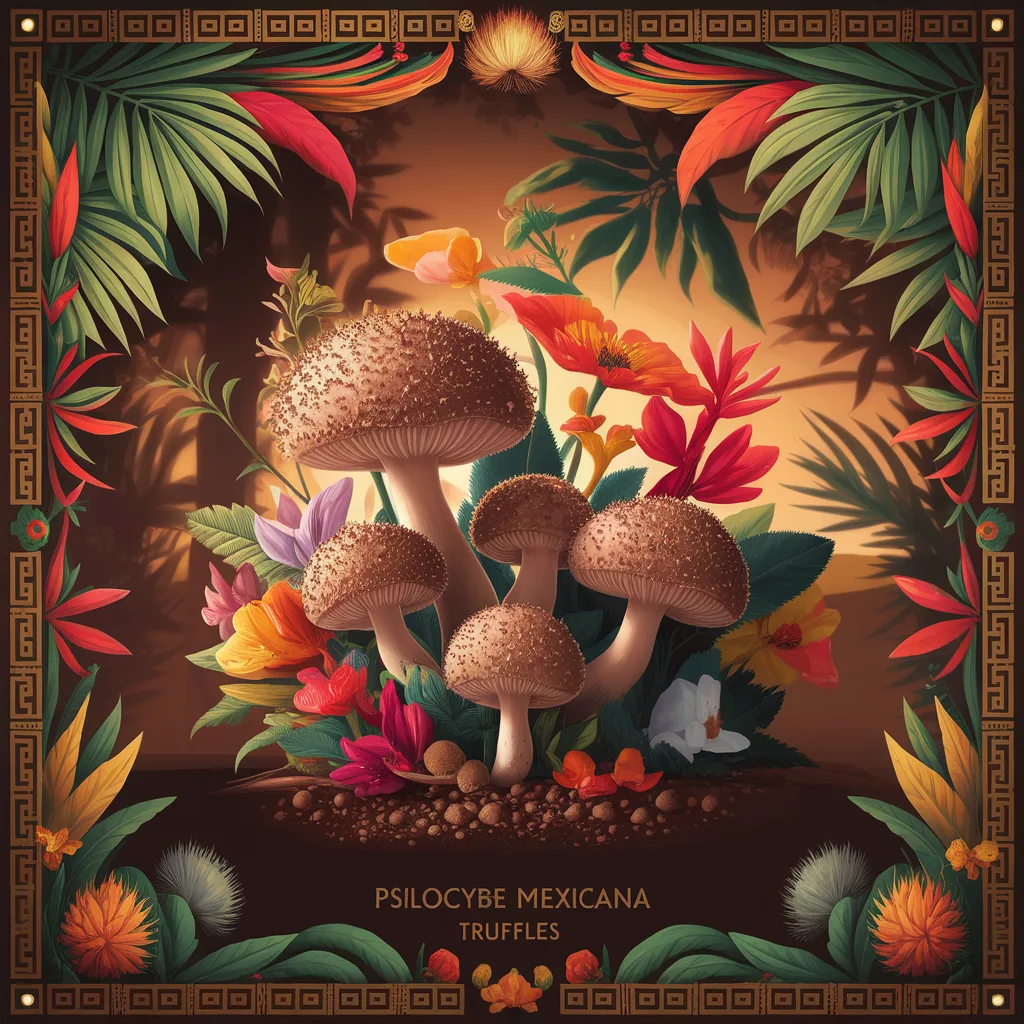
Psilocybe mexicana is a historically pivotal psilocybin-containing species native to Central America, particularly the highlands of Mexico and Guatemala, where it has been used in Mazatec indigenous ceremonial contexts for centuries. It holds unique scientific significance as the species from which Albert Hofmann and Roger Heim first isolated and characterized pure psilocybin and psilocin in 1958–1959, establishing the biochemical basis of all subsequent psychedelic mushroom research. Like P. tampanensis and P. atlantis, P. mexicana can produce sclerotia — psilocybin-containing underground truffles — though fruiting body production is also well-documented. Commercial cultivation in the Netherlands centers on the sclerotia, which are legally sold as magic truffles. Potency is considered mild to moderate, with psilocybin content in sclerotia generally lower than P. atlantis or commercial Hollandia cultivars. The experiential profile is characterized by euphoria, sociability, and a light, often playful quality distinct from deeper introspective varieties.
#18
Popularity Rank
Extensive
Research Level
3
References
3
Key Compounds
Independent Research Review · Last Reviewed May 3, 2026
Mexicana (Psilocybe mexicana) is a psychoactive mushroom or truffle entry with a extensive level of research context. Its key compounds - Psilocybin, Psilocin, Baeocystin - should be evaluated through legality, product testing, mental-health screening, medication interactions, and setting risk. Clinical psilocybin findings come from supervised protocols and should not be treated as proof that unregulated consumer products are safe or legal.
Buyer decision guide
Use this section to separate clinical research, product marketing, legal status, and safety risk before making decisions about mexicana.
Mexicana is usually discussed as a psilocybin-containing sclerotia or truffle-style entry, not as evidence for a standardized clinical product. The strongest human evidence concerns screened studies with controlled psilocybin, professional oversight, and defined endpoints, not unsupervised mushrooms, sclerotia, or cultivar names.
Psilocybe mexicana may fall under psilocybin or psilocin controls in many jurisdictions. Local rules vary and can change, while decriminalization, sclerotia labels, or vendor language should not be treated as legal clearance.
Unregulated labels cannot verify species identity, alkaloid content, adulterants, storage history, or contamination. Closely related species and reused common names make identity checks more important than marketing names.
People with personal or family psychosis or bipolar history, serious cardiovascular disease, pregnancy, or serotonergic and psychiatric medications need clinician-level risk review. Acute distress, confusion, chest pain, or prolonged symptoms require medical help.
Mexicana has been extensively studied in both preclinical and clinical research. Multiple human trials have investigated its potential benefits.
Of all the psilocybin truffle varieties available in Dutch smartshops, Mexicana has the deepest roots in human history. Long before any scientist in a lab isolated psilocybin or any policy-maker...
Mexicana has been used in traditional medicine systems for centuries, particularly in Traditional Chinese Medicine (TCM) and other Asian healing practices.
Historical Context: Traditional use does not guarantee efficacy or safety. Modern research is ongoing to validate traditional claims.
Of all the psilocybin truffle varieties available in Dutch smartshops, Mexicana has the deepest roots in human history. Long before any scientist in a lab isolated psilocybin or any policy-maker debated its legal status, the Mazatec people of Oaxaca, Mexico were using this mushroom in veladas — night-time healing ceremonies led by curanderas (female shamans). The most famous of these healers, María Sabina, used Psilocybe mexicana and related species for decades before Gordon Wasson's 1957 Life magazine article brought the practice to Western attention, changing the course of psychedelic history forever.
The scientific chapter of Mexicana's story is equally remarkable. When Swiss chemist Albert Hofmann received samples of the mushroom from French mycologist Roger Heim in the late 1950s, he had already synthesized LSD. Working with Psilocybe mexicana, Hofmann isolated and first characterized both psilocybin and psilocin in 1958 — the compounds that give all "magic mushrooms" and "magic truffles" their effects. Hofmann then famously self-administered the extracted compounds to confirm their activity, making himself the first person to experience a controlled psilocybin trip. Mexicana wasn't just the first mushroom widely studied; it literally gave us our entire understanding of how psilocybin works.
In terms of the actual experience, Mexicana is the social butterfly of the truffle world. Where Tampanensis is philosophical and Hollandia is spiritual, Mexicana is fun. People laugh. Conversation flows easily and feels charged with warmth and meaning. Colors brighten, music deepens, everything feels connected and light. The word people reach for most often is "giggly" — there's a playful, euphoric quality that makes it particularly enjoyable in small groups of trusted friends. At typical doses (8–12 grams fresh), you're unlikely to encounter the deeper or more challenging psychedelic territory: no ego dissolution, no intense emotional confrontations, no overwhelming visuals. Just a really good evening.
The potency is mild to moderate — the lowest among the main commercial truffle varieties. This isn't a disadvantage; it's a feature. Mexicana is forgiving. It's accessible for newer users. It allows for the "sliding scale" experience that experienced users value: if you want a light, pleasant trip with friends, take 8–10 grams and you'll have exactly that. If you want something deeper, you can take more, and it'll meet you there — just without the intensity spike that higher-potency varieties can produce.
Mexicana truffles also have a long track record of safety when used responsibly. Physically, psilocybin is among the safest psychoactive substances known — it has no known lethal dose in humans, is physiologically non-addictive, and doesn't damage organs. The risks are psychological (anxiety, bad trips) and situational (impaired judgment, unsupervised environments) rather than chemical. These apply to any psilocybin source, but Mexicana's mild potency makes it particularly low-risk in both categories.
One more thing worth knowing: Mexicana is the only psilocybin-containing mushroom species that Hofmann himself ever consumed. In his memoir, he described the experience as warm, dreamlike, and unexpectedly gentle — a quality that has defined the species ever since. If you're new to truffles and want to understand what the fuss is about without being thrown in at the deep end, Mexicana is the traditional starting point for a reason.
Top products containing verified Psilocybe mexicana extracts.
Personalized dosage recommendations based on your experience level, body weight, and goals.
Independent Research Review
The editorial team reviews mushroom encyclopedia entries for sourcing, clarity, safety caveats, and citation support.
Last reviewed: May 3, 2026
Click anywhere or press Escape to close