$29.95 $0.50/serving
View Profile You must be at least 18 years old to enter this site.
This is a legal, non-psychoactive functional mushroom guide. Talk with your clinician first if you take blood thinners, diabetes medications, immune-modulating drugs, or are in cancer treatment.
Best supplement form
Compare products that match the form most often recommended for Meshima.
Evidence summary
2 cited references reviewed for the Meshima guide.
For healthy aging
See how Meshima compares with Reishi, Chaga, and Turkey Tail for older adults.
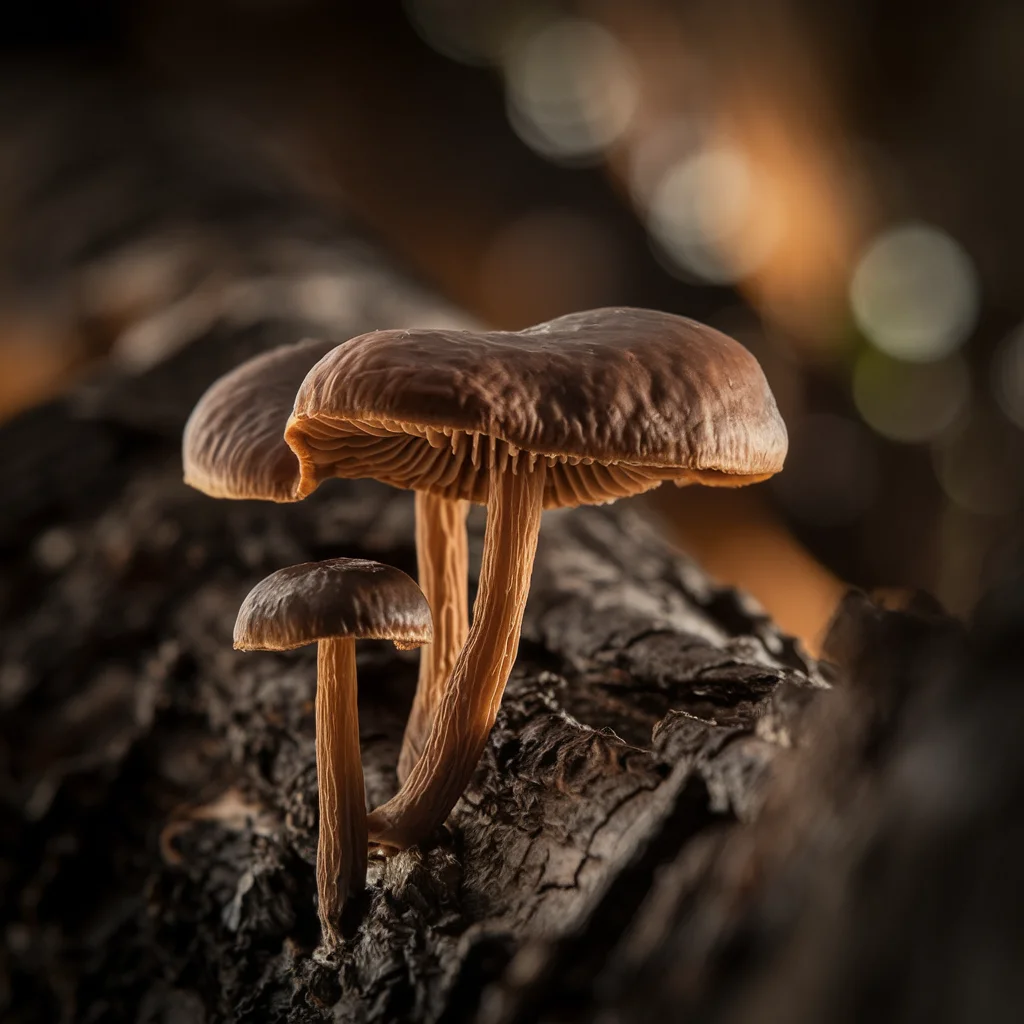
Phellinus linteus is a perennial polypore fungus of the family Hymenochaetaceae, forming large, woody, hoof-shaped basidiocarps on the trunks of living and dead hardwood trees, particularly mulberry (Morus spp.). The fruiting body is characterized by a dark brown to black upper surface with concentric zonation, a golden-yellow to brown pore surface, and extremely hard, woody tissue. Known as Meshima (women's island) in Japan, Sang-Hwang in Korea, and Song Gen in China, it has been used in East Asian traditional medicine for centuries. P. linteus has become one of the most intensively studied medicinal mushrooms in East Asian oncology, with over 100 published studies documenting its immunomodulatory, anti-tumor, anti-inflammatory, and antioxidant properties, primarily attributed to hispolon (a polyphenol), proteoglycans, and high-molecular-weight polysaccharides.
#23
Popularity Rank
Extensive
Research Level
2
References
4
Key Compounds
Independent Research Review · Last Reviewed May 3, 2026
Meshima (Phellinus linteus) is a functional mushroom with a extensive level of scientific research supporting its use. Its primary bioactive compounds - Hispolon, Polysaccharides, Interfungins, and 1 others - have been studied for benefits including immune modulation, anti-cancer research, anti-inflammatory, antioxidant protection. Multiple human clinical trials have investigated Meshima, making it one of the more evidence-backed functional mushrooms available. Meshima is ranked #23 in popularity among functional mushroom species, with 2 cited research references in our database. The most commonly recommended form is phellinus linteus hot-water extract with beta-glucan testing. Typical supplemental dosages range from 500 mg to 3,000 mg per day depending on extract concentration and intended use.
Buyer decision guide
Use this section to compare evidence strength, active compounds, researched forms, and safety limits for meshima.
Phellinus linteus contains protein-bound polysaccharides studied for immunomodulatory effects. Human data show increased NK cell activity and safety in oral consumption. Animal models demonstrate tumor growth inhibition and reduced metastasis, but human cancer efficacy remains limited to three case reports. Anti-inflammatory and antioxidant effects are documented in preclinical research.
Polysaccharide-protein complexes (particularly beta-glucans) are the primary bioactive constituents. Hispolon and furopyranone compounds have been isolated and studied for anti-inflammatory and protein-glycation inhibition properties. These compounds drive most immunomodulatory activity in published studies. Extraction method and source material (fruiting body vs. mycelium) affect compound concentration and bioavailability.
Water-soluble polysaccharide extracts from fruiting bodies and mycelium are the most studied forms in published research. Aqueous extraction preserves polysaccharide integrity. One published clinical trial used oral mycelium extract in healthy volunteers. Standardization to polysaccharide content is not universally reported across commercial products, affecting comparability across studies.
One controlled human trial found no adverse effects on liver or renal function with oral P. linteus extract in healthy individuals. Long-term safety data in clinical populations remain limited. No established maximum daily dose exists in peer-reviewed literature. Individuals on immunosuppressive medications or with autoimmune conditions should consult healthcare providers before use due to immune-stimulating properties.
Meshima has been extensively studied in both preclinical and clinical research. Multiple human trials have investigated its potential benefits.
Meshima is a dark, woody bracket fungus that grows on mulberry trees and has become one of the most intensively researched medicinal mushrooms in the world, particularly in Japan and Korea. Its...
Meshima has been used in traditional medicine systems for centuries, particularly in Traditional Chinese Medicine (TCM) and other Asian healing practices.
Historical Context: Traditional use does not guarantee efficacy or safety. Modern research is ongoing to validate traditional claims.
Meshima is a dark, woody bracket fungus that grows on mulberry trees and has become one of the most intensively researched medicinal mushrooms in the world, particularly in Japan and Korea. Its Japanese name, Meshima, means "women's island" — a reference to Meshima Island in Nagasaki Prefecture where the mushroom was traditionally harvested. In Korea, it is called Sang-Hwang and has been used for centuries as a traditional remedy for various ailments, particularly those related to immune function.
What sets Meshima apart from other medicinal mushrooms is the depth and focus of its research base. Over 100 published studies have investigated its properties, with particular attention to its immunomodulatory and anti-cancer potential. Korean and Japanese researchers have documented its ability to activate multiple arms of the immune system — macrophages, natural killer cells, T-cells, and dendritic cells — making it one of the most potent immune-stimulating mushrooms studied to date. Memorial Sloan Kettering Cancer Center maintains a dedicated monograph on Phellinus linteus, acknowledging the significant body of preclinical evidence.
Traditionally, Meshima was prized in Korean and Japanese folk medicine as a tonic for women's health and general vitality. Korean practitioners used it to support patients undergoing conventional medical treatments, and it remains widely used as a complementary health approach in East Asian countries. The mushroom's long history of safe use in traditional medicine has contributed to its acceptance in modern integrative health practices.
Meshima supplements are available primarily in capsule and extract form. Mushroom Wisdom (a well-known medicinal mushroom brand) sells dedicated Meshima products, and FreshCap lists Phellinus as one of its key mushroom species. The extract is also found in some premium multi-mushroom immune support formulas. Typical dosages range from 500 mg to 2,000 mg per day of standardized extract.
When selecting a Meshima supplement, look for products standardized to polysaccharide or beta-glucan content, as these are the primary bioactive compounds. Hot water extraction is the standard method for Meshima, as its woody fruiting body requires intensive processing to release the beneficial compounds. Products from reputable brands with third-party testing are recommended, as the mushroom's relative obscurity in Western markets means quality can vary significantly.
Meshima combines well with other immune-supporting mushrooms like turkey tail, maitake, and reishi for a comprehensive immune support protocol. Some practitioners recommend it alongside conventional health approaches, though it is important to consult with a healthcare provider before combining any supplement with medical treatments. While Meshima may not yet have the mainstream recognition of lion's mane or reishi, its research profile makes it one of the most scientifically compelling medicinal mushrooms available.
Products containing Phellinus linteus extracts, with emphasis on verification, format, and practical daily use.


Personalized dosage recommendations based on your experience level, body weight, and goals.
Independent Research Review
The editorial team reviews mushroom encyclopedia entries for sourcing, clarity, safety caveats, and citation support.
Last reviewed: May 3, 2026
Click anywhere or press Escape to close