
Mushroom Coffee: Benefits, Side Effects, and Whether It's Worth the Hype
Is mushroom coffee actually better than regular coffee? We break down the science behind lion's mane, chaga, and reishi-infused coffee — what works, what doesn't, and how to choose a quality product.

Board-Certified Physician · Medical Reviewer · Published February 15, 2026
📑 In This Article
- What Is Mushroom Coffee, Exactly?
- The Science: Does Mushroom Coffee Actually Work?
- Mushroom Coffee vs. Regular Coffee: An Honest Comparison
- Side Effects and Safety Considerations
- How to Choose a Quality Mushroom Coffee
- Notable Mushroom Coffee Brands Worth Trying
- Best Mushroom Coffee Blends for Specific Goals
- The Verdict: Is Mushroom Coffee Worth It?
- What the Research Shows About Mushroom Coffee Specifically
- Comparing the Major Brands Honestly
- Frequently Asked Questions
- Beyond the Morning Cup: Building a Complete Daily Mushroom Protocol
Mushroom coffee has gone from niche biohacker curiosity to mainstream wellness product in under five years. Walk into any Whole Foods, scroll TikTok for ten minutes, or browse Amazon's supplement section and you'll see dozens of brands claiming their mushroom-infused coffee will sharpen your focus, calm your nerves, and supercharge your immune system — all while tasting just like your regular morning cup.
But does it actually work? Or is this another wellness trend long on marketing and short on science?
As a site dedicated to evidence-based mushroom supplement analysis, we dug into the research, tested multiple products, and talked to mycologists. Here's the honest breakdown.
What Is Mushroom Coffee, Exactly?
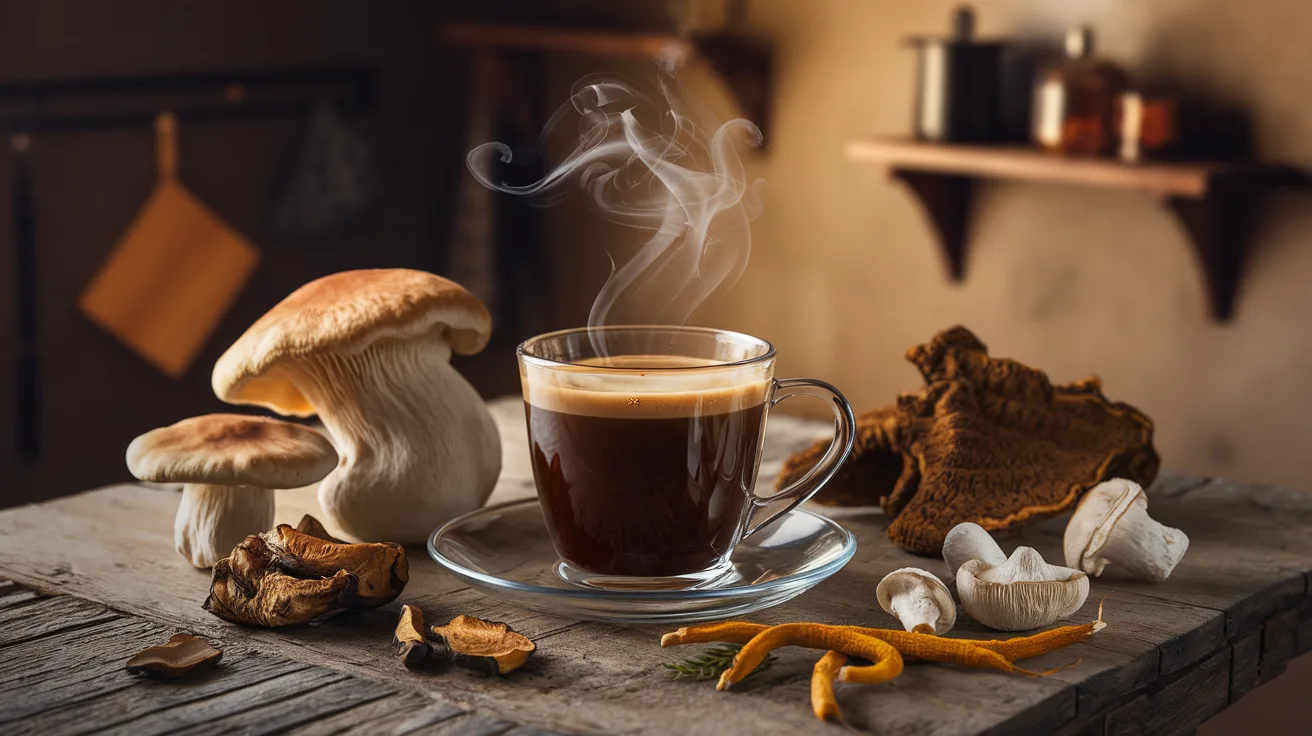
Mushroom coffee isn't brewed from mushrooms. It's regular coffee — usually instant or ground — blended with powdered extracts of functional mushrooms. The most common species used are:
- Lion's Mane (Hericium erinaceus) — for cognitive support and nerve growth factor stimulation
- Chaga (Inonotus obliquus) — for antioxidant content and immune modulation
- Reishi (Ganoderma lucidum) — for stress adaptation and sleep quality
- Cordyceps (Cordyceps militaris) — for energy and athletic performance
Most products contain roughly half the caffeine of regular coffee (40-50mg per serving vs. 95mg in a standard cup), with mushroom extract making up the difference in volume. The idea is simple: get the alertness benefits of caffeine with less jitteriness, plus whatever benefits the mushroom extracts provide.
The Science: Does Mushroom Coffee Actually Work?
Here's where we need to separate two questions that the marketing deliberately conflates:
- Do functional mushroom extracts have real health benefits? — Yes, with caveats.
- Does mushroom coffee deliver those benefits? — Usually not at meaningful doses.
The Dose Problem
This is the elephant in the room. Clinical studies on lion's mane typically use 500mg to 3,000mg of extract per day. Studies on reishi use 1,000-5,000mg. Chaga research uses similar ranges. Cordyceps studies typically dose at 1,000-4,000mg.
Most mushroom coffee products contain 250-500mg total mushroom extract per serving — split across 2-4 species. That means you might be getting 100-150mg of any single mushroom per cup. That's a fraction of a clinically relevant dose.
What the Research Actually Shows
Lion's Mane: Genuinely promising for cognitive support. Multiple studies show it stimulates Nerve Growth Factor (NGF) production, which supports neuroplasticity and may protect against age-related cognitive decline. But you need adequate doses — most researchers suggest a minimum of 500mg of quality extract daily.
Chaga: Extremely rich in antioxidants (one of the highest ORAC scores of any food). In vitro and animal studies show anti-inflammatory and immune-modulating properties. Human clinical trials are still limited, but the traditional use history is extensive. Chaga is best extracted with hot water, which coffee brewing technically provides.
Reishi: The best-studied mushroom for stress and sleep. A 2012 study found that 1,800mg of reishi extract significantly improved fatigue scores and quality of life in breast cancer patients. For stress adaptation, reishi is the go-to functional mushroom, but again — dose matters.
Cordyceps: Shows real promise for energy and exercise performance through increased cellular ATP production and improved oxygen utilization. A 2016 randomized controlled trial found that 4 weeks of cordyceps supplementation improved exercise tolerance in healthy adults. Read our full deep dive on cordyceps and athletic performance.
Mushroom Coffee vs. Regular Coffee: An Honest Comparison
| Factor | Regular Coffee | Mushroom Coffee |
|---|---|---|
| Caffeine | 80-100mg/cup | 40-50mg/cup |
| Price | $0.15-0.50/cup | $1.50-3.00/cup |
| Jitteriness | Common at 2+ cups | Less likely (lower caffeine) |
| Antioxidants | High (chlorogenic acid) | Higher (mushroom polyphenols added) |
| Functional benefits | Alertness, metabolism | Potentially: focus, immunity, adaptation |
| Taste | Familiar | Slightly earthy, brand-dependent |
| Acidity | Moderate-high | Often lower (alkalizing mushrooms) |
The most honest benefit of mushroom coffee is probably the reduced caffeine content. If you're caffeine-sensitive or trying to cut back but can't quit the ritual, mushroom coffee provides a legitimate halfway point. The mushroom extract adds some nutritional value — beta-glucans, triterpenes, polyphenols — even if the dose isn't clinically therapeutic.
Side Effects and Safety Considerations
Mushroom coffee is generally safe for most people. The mushroom extracts used in commercial products have long safety histories. However, there are some things to watch for:
Potential Side Effects
- Digestive discomfort: Some people experience mild bloating or upset stomach when first introducing mushroom extracts, especially reishi. This usually resolves within a week.
- Allergic reactions: Rare, but possible — particularly in people with mold allergies. Start with a small amount if you've never consumed functional mushrooms.
- Blood sugar effects: Reishi and chaga may lower blood sugar. If you're diabetic or on blood sugar medication, monitor levels when starting.
- Blood thinning: Reishi has mild anticoagulant properties. Discontinue 2 weeks before surgery. If you're on blood thinners (warfarin, etc.), consult your doctor first.
Who Should Avoid Mushroom Coffee
- Pregnant or breastfeeding women: Insufficient safety data for most functional mushrooms during pregnancy.
- People on immunosuppressants: Mushroom beta-glucans stimulate immune activity, which can interfere with immunosuppressive therapy (organ transplant patients, autoimmune conditions on biologics).
- Pre-surgery: Stop 2 weeks before any scheduled surgery due to reishi's blood-thinning potential.
How to Choose a Quality Mushroom Coffee
If you've decided to try mushroom coffee, here's what separates the good products from the garbage:
1. Check the Extract Type
Fruiting body extracts are what you want. Many cheap products use "mycelium on grain" — mushroom root structure grown on rice or oats. The resulting powder is mostly starch with minimal bioactive compounds. The label should explicitly say "fruiting body" or "fruiting body extract."
For a deeper understanding of what to look for on labels, read our guide on how to read a mushroom supplement COA.
2. Look for Beta-Glucan Content
Beta-glucans are the primary bioactive compounds in functional mushrooms. A quality product will list beta-glucan content — ideally ≥20% for a blended product. If they only list "polysaccharides," that number may include grain starch and is essentially meaningless.
3. Verify the Mushroom Dose Per Serving
The label should tell you exactly how much of each mushroom extract is in one serving. If it says "proprietary blend 500mg" without breaking down individual species, you have no idea what you're getting. Transparency matters.
4. Hot Water Extraction
The key bioactive compounds in most functional mushrooms (beta-glucans, triterpenes) are locked behind chitin cell walls. Hot water extraction breaks these down and makes the compounds bioavailable. Dual extraction (hot water + alcohol) is even better for species like reishi and chaga, which contain both water-soluble and alcohol-soluble compounds.
5. Third-Party Testing
Look for products tested by independent labs for potency, heavy metals, pesticides, and microbial contamination. A legit brand will publish their COA or provide it on request.
Notable Mushroom Coffee Brands Worth Trying
Without endorsing any single brand, here are the categories of products currently on the market:
Premium Tier ($2.50-3.50/serving)
Brands using organic fruiting body extracts, publishing COAs, listing individual mushroom doses and beta-glucan content. These are the products most likely to deliver meaningful amounts of bioactive compounds. Look for brands that use hot water or dual extraction and source from controlled cultivation rather than wild harvest.
Mid-Range ($1.50-2.50/serving)
Decent quality, often fruiting body based, but may use proprietary blends that obscure individual dosing. Good enough for casual use if you're primarily after the reduced caffeine and mild adaptogenic benefits.
Budget Tier (Under $1.50/serving)
Proceed with caution. At this price point, most products use mycelium on grain, which means you're paying for flavored grain starch with trace amounts of actual mushroom compounds. Check the supplement facts panel carefully.
Best Mushroom Coffee Blends for Specific Goals
For Focus and Productivity
Look for blends heavy on lion's mane. This is the mushroom with the strongest evidence for cognitive enhancement through NGF stimulation. Ideally paired with moderate caffeine (40-60mg) for a smooth, sustained focus without the crash. Some brands add L-theanine (from tea) for additional calm focus.
For Energy and Exercise
Cordyceps-dominant blends are your best bet. Cordyceps supports ATP production and oxygen utilization, complementing caffeine's stimulant effects. These work best taken 30-60 minutes before a workout.
For Stress and Calm
Reishi-forward blends with lower caffeine content (or even decaf bases). Reishi's triterpenes have calming, adaptogenic properties that can take the edge off caffeine. These are good for evening use or for people who find regular coffee too stimulating.
For Immune Support
Chaga and turkey tail blends provide the highest beta-glucan content. Chaga is particularly rich in antioxidants. Turkey tail has the strongest clinical evidence for immune modulation of any functional mushroom — look for it in premium immune-focused blends.
The Verdict: Is Mushroom Coffee Worth It?
Here's our honest assessment:
Mushroom coffee is worth trying if:
- You want to reduce your caffeine intake without giving up coffee
- You're curious about functional mushrooms and want an easy entry point
- You enjoy the taste (many people genuinely prefer the smoother, less acidic flavor)
- You choose a quality product with transparent dosing and third-party testing
Mushroom coffee is NOT worth it if:
- You expect therapeutic-level benefits from mushroom compounds (the doses are too low)
- You're buying the cheapest option (you're probably getting grain starch)
- You're using it as a replacement for standalone mushroom supplementation
- You're happy with your current coffee and just want mushroom benefits (take a capsule instead)
The mushroom coffee market has grown from $1.2 billion to over $4 billion in just a few years. Much of that growth is driven by marketing, not science. But the underlying premise — that functional mushroom extracts have real biological activity — is sound. The problem is delivery format and dosing, not the mushrooms themselves.
If you're serious about mushroom supplementation, build a proper mushroom stack with therapeutic doses. If you just want a healthier morning ritual with less caffeine and some added nutritional value, a quality mushroom coffee is a perfectly reasonable choice.
Just don't expect miracles in a mug.
What the Research Shows About Mushroom Coffee Specifically
Most efficacy research is done on pure mushroom extracts, not mushroom coffee formulations. We're extrapolating from species research to product format — reasonable but not directly tested in the coffee context. What we do know: the active compounds in quality mushroom coffee (lion's mane hericenones/erinacines, cordyceps cordycepin, reishi ganoderic acids) are heat-stable. Making coffee at 90-96°C doesn't degrade these compounds — in fact, hot water extraction IS how beta-glucans become bioavailable. The coffee preparation itself functions as a mini-extraction process.
The dose caveat matters enormously. Most mushroom coffee products contain 250-500mg of each mushroom extract per serving — effective for acute effects (the USC 2023 study showed cognitive processing improvement from a single 1,800mg dose, and lower doses may produce partial acute effects) but below the 1,800-3,000mg used in long-term cognitive studies. Mushroom coffee is arguably best for people who also take additional mushroom supplements separately — the coffee adds a functional boost while daily capsule supplementation provides the therapeutic doses. Or treat it as your entry point and work up to adding capsules alongside it.
Comparing the Major Brands Honestly
Four Sigmatic: The category pioneer. Finnish company, in market since 2012 before mushroom coffee was mainstream. Formulas use real extracted fruiting body mushrooms with reasonable COA transparency. Per-serving mushroom doses: typically 250-350mg per mushroom. Price: premium. What you're paying for: brand trust, quality sourcing, and the fact that they were doing this before it was cool and have had years to refine their formulations.
RYZE: The Instagram-era challenger. Heavy social media marketing, smooth taste profile. Reasonable mushroom quality claims. See our RYZE vs Four Sigmatic comparison for specific ingredient analysis and side-by-side sourcing transparency.
MUDWTR: The "alternative to coffee" positioning. Lower caffeine (chai-based), includes turmeric, cinnamon, and other adaptogens alongside mushrooms. Appeals to people specifically reducing caffeine intake. Our MUDWTR vs RYZE breakdown covers the differences in detail. Good option for caffeine-sensitive people who want the functional mushroom benefits without the caffeine.
Frequently Asked Questions
Does mushroom coffee have less caffeine than regular coffee?
It depends on the product. Many mushroom coffee products contain as much caffeine as regular coffee (80-100mg per serving) because they use standard coffee as the base. MUDWTR uses chai with significantly less caffeine (25-35mg). Some brands offer specifically low-caffeine or decaf versions. Check the specific product's caffeine content — "mushroom coffee" doesn't inherently mean "less caffeine."
Can I just add mushroom powder to my regular coffee?
Yes, and this is often the most cost-effective approach. Buy lion's mane extract powder and cordyceps extract powder separately, add 1-2g of each to your morning coffee. Stir well. This gives you control over exact doses and lets you choose quality extracts independently rather than relying on a bundled product's sourcing decisions. Tradeoff: less convenient than pre-mixed products and requires buying separate ingredients. But if you're already using coffee you love, this builds the functional mushroom habit without changing your morning ritual.
How do I know if the mushrooms in my coffee are real vs mycelium on grain?
Ask the brand. A quality brand will have COA documentation showing fruiting body sourcing and beta-glucan content. Check the product page for "fruiting body extract," "dual extracted," or specific beta-glucan percentages. The mycelium on grain explainer applies equally to mushroom coffee as to capsules — the coffee flavor masks quality differences that taste would otherwise reveal. Don't let the pleasant flavor of a product's coffee component distract you from checking the mushroom sourcing.
Is mushroom coffee safe during pregnancy?
The caffeine component follows standard pregnancy caffeine guidelines (≤200mg/day recommended limit). For the mushroom components: most functional mushrooms lack clinical safety data in pregnant populations. Traditional use suggests safety in food quantities, but supplemental extract doses aren't specifically studied in pregnancy. Conservative approach: discuss with your OB before continuing regular mushroom coffee supplementation during pregnancy.
What's the best mushroom coffee for people who don't like coffee?
MUDWTR is specifically designed for this — it uses chai as the base rather than coffee, with much lower caffeine and a spiced, earthy flavor profile that doesn't taste like coffee. Alternatively, some brands offer mushroom hot cocoa blends or mushroom matcha. If you want the functional mushroom benefits without any caffeine at all, capsules or tinctures give you full dose control without any beverage formulation. The format is secondary to getting the compounds consistently — use whatever makes that easiest for your lifestyle.
Beyond the Morning Cup: Building a Complete Daily Mushroom Protocol
Mushroom coffee is an excellent entry point, but for people serious about getting the full therapeutic benefits of functional mushrooms, it's rarely sufficient as your only source. Here's how to think about building beyond mushroom coffee into a complete daily protocol.
The dose gap: most mushroom coffee products provide 250-500mg per mushroom species per serving. The research showing meaningful cognitive outcomes for lion's mane uses 1,800-3,000mg daily. The research showing immune outcomes for turkey tail uses 1,000-3,000mg daily. Mushroom coffee fills maybe 15-25% of the therapeutic dose for lion's mane and even less for species not typically included in coffee blends (like reishi, turkey tail, or chaga). If cognitive optimization is a serious goal, mushroom coffee as your sole source isn't going to get you there.
The format gap: mushroom coffee primarily delivers lion's mane and cordyceps — the energizing, cognitively stimulating species that pair well with caffeine in a morning beverage. It typically doesn't deliver meaningful amounts of reishi (which should be taken in the evening, not morning), turkey tail (which benefits from higher doses than coffee delivers), or tremella (which is rarely included in coffee formulations). A complete daily protocol uses mushroom coffee for the morning energizing species and adds capsules or tinctures for the evening restorative and immune-support species.
The suggested complete protocol that layers well with a mushroom coffee habit: Morning — mushroom coffee (lion's mane + cordyceps from the coffee, caffeine for alertness) + additional lion's mane capsules if you want to hit the 1,800mg+ range. With lunch or afternoon — turkey tail capsules (1,000-1,500mg, immune support). Evening — reishi capsules or tincture (1,000-1,500mg dual-extracted, 1-2 hours before bed). Optional additions: tremella for skin health (any time), chaga for antioxidant support (morning with coffee is fine).
This protocol layers functional mushrooms across the day in a way that respects both the timing requirements and the dose requirements for each species. Mushroom coffee does the heavy lifting for morning consistency; targeted capsules fill the dose and species gaps. Find quality options across all formats in our capsules category, tinctures category, and gummies category. Use our MUDWTR vs RYZE and RYZE vs Four Sigmatic comparisons to choose your coffee base, then build out from there.
Tags
Medically Reviewed By
Dr. Igor I. Bussel, MD
Board-certified physician affiliated with the University of California, Irvine (UCI), the Gavin Herbert Eye Institute, and the UCI School of Medicine.
Related Articles

⚖️ Product Comparisons
Explore the Mushroom World
Dive deeper into species profiles, compare products, and find stores near you.