
Turkey Tail Mushroom Benefits: The Science Behind Nature's Most Researched Immune Supplement
Turkey tail (Trametes versicolor) is the most clinically studied functional mushroom for immune support. Learn about PSK, PSP, beta-glucans, dosing, and how to choose a quality supplement.
Board-Certified Physician · Medical Reviewer · Published February 12, 2026
📑 In This Article
- What Makes Turkey Tail Unique
- The Clinical Evidence: Cancer Research
- Immune Support Beyond Cancer
- How to Choose a Quality Turkey Tail Supplement
- Dosage and How to Take Turkey Tail
- Safety and Side Effects
- Turkey Tail vs. Other Immune Mushrooms
- The Bottom Line
- Who Should (and Shouldn't) Take Turkey Tail
- How to Stack Turkey Tail
- Frequently Asked Questions
- The Oncology Research in More Depth
If you could only take one functional mushroom supplement for immune support, most mycologists and integrative medicine practitioners would tell you the same thing: turkey tail. While lion's mane dominates the nootropic conversation and reishi gets the "mushroom of immortality" headline, turkey tail (Trametes versicolor) quietly holds the strongest clinical evidence base of any medicinal mushroom — particularly for immune modulation.
This isn't wellness hype. Turkey tail's key compound, PSK (polysaccharide-K), has been an approved adjunct cancer therapy in Japan since 1977. Nearly five decades of clinical data exist. Yet most Western consumers have never heard of it. Let's fix that.
What Makes Turkey Tail Unique
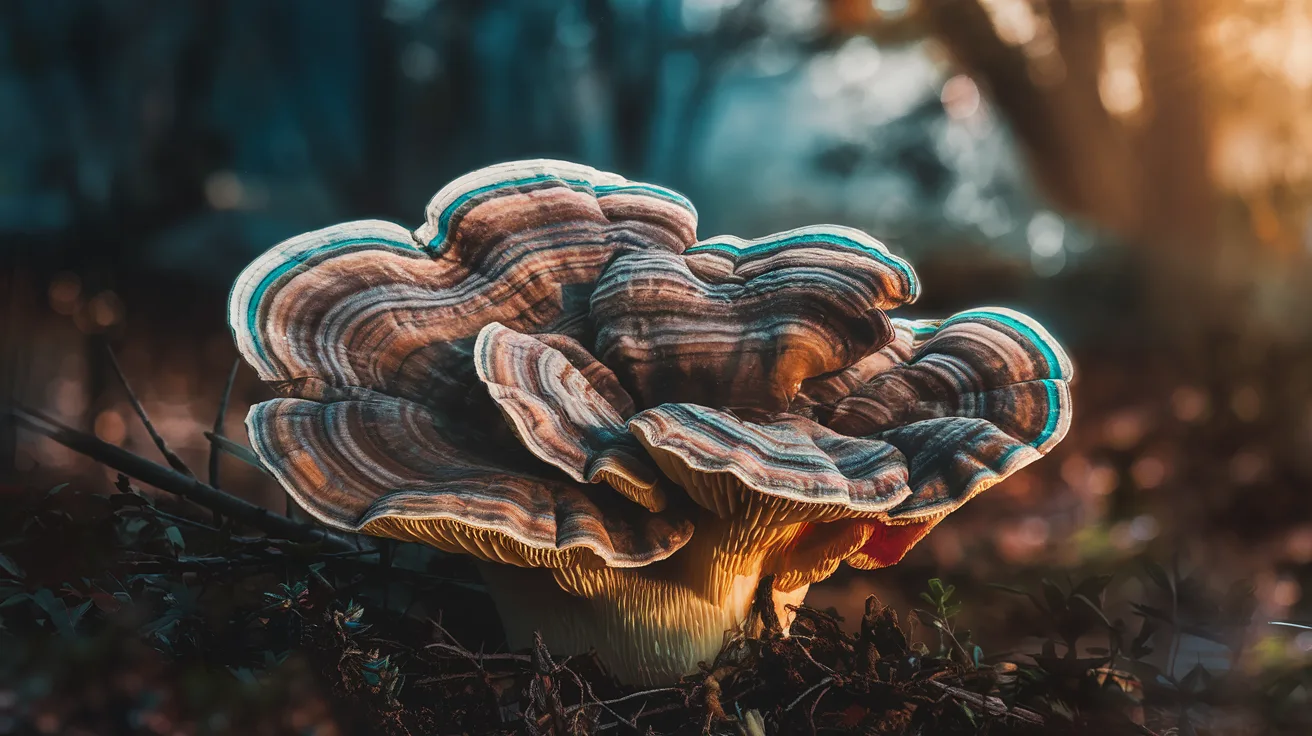
Turkey tail gets its common name from the colorful concentric rings on its fan-shaped fruiting bodies — they look remarkably like a wild turkey's tail feathers. You'll find it growing on dead hardwood logs across every continent except Antarctica. It's one of the most common polypore mushrooms on Earth, which is part of why it's been studied so extensively.
But what makes turkey tail pharmacologically unique are two protein-bound polysaccharides:
- PSK (Polysaccharide-K / Krestin) — a beta-glucan bound to a protein backbone, extracted with hot water. This is the compound used in Japanese oncology.
- PSP (Polysaccharopeptide) — a similar compound isolated in China, with overlapping but distinct immunological activity.
Both PSK and PSP are potent biological response modifiers (BRMs) — they don't attack pathogens directly. Instead, they upregulate your immune system's own machinery: natural killer cells, T-cells, dendritic cells, and macrophages.
The Clinical Evidence: Cancer Research
Let's be clear upfront: turkey tail is not a cancer cure. No responsible source claims it is. What the research shows is that turkey tail — specifically PSK — can improve outcomes when used alongside conventional treatments like chemotherapy and radiation.
Gastric Cancer
The strongest evidence comes from gastric (stomach) cancer trials in Japan. A landmark meta-analysis of over 8,000 patients published in Cancer Research found that adding PSK to chemotherapy after surgery improved 5-year survival rates by approximately 10-15% compared to chemotherapy alone. Multiple randomized controlled trials confirmed these results, which led to PSK's approval as a prescription drug in Japan.
Colorectal Cancer
A 2006 randomized trial of 205 patients with stage III colorectal cancer found that the group receiving PSK alongside chemotherapy had significantly higher disease-free survival rates after 7 years compared to the control group. The results were striking enough that PSK became a standard adjunctive recommendation in Japanese colorectal cancer treatment protocols.
Breast Cancer
A 2012 NIH-funded Phase I clinical trial at the University of Washington and Bastyr University found that turkey tail supplementation (up to 9g/day) improved immune status in breast cancer patients who had completed radiation therapy. Natural killer cell activity — a key marker of anti-tumor immunity — increased in a dose-dependent manner.
Lung Cancer
Several Japanese trials demonstrated that non-small cell lung cancer patients receiving PSK with chemotherapy had improved survival compared to chemotherapy alone. A pooled analysis showed the benefit was most pronounced in stages I-III.
Immune Support Beyond Cancer
You don't need a cancer diagnosis to benefit from turkey tail. The same immune-modulating properties that make it valuable in oncology have broader applications for everyday immune health.
Beta-Glucan Content
Turkey tail is one of the richest natural sources of beta-glucans — the immune-active polysaccharides found in all medicinal mushrooms. High-quality turkey tail extracts can contain 40-60% beta-glucans by weight, significantly higher than most other species. These beta-glucans prime your immune cells to respond faster and more effectively to threats.
Gut Microbiome Support
A 2014 study published in Gut Microbes found that PSP from turkey tail acts as a prebiotic, selectively promoting the growth of beneficial bacteria like Bifidobacterium and Lactobacillus while inhibiting pathogenic strains like Clostridium and Staphylococcus. Given that roughly 70% of the immune system resides in the gut, this prebiotic effect may be a key mechanism behind turkey tail's immune benefits.
Antioxidant Properties
Turkey tail contains a diverse array of phenolic compounds and flavonoid antioxidants, including quercetin and baicalein. These help reduce oxidative stress, which is implicated in chronic inflammation and immune dysfunction.
Antiviral Activity
Preliminary research suggests turkey tail extracts may have antiviral properties. A 2014 study found PSP improved immune markers in HPV-positive patients. Other in vitro studies have shown activity against herpes simplex and HIV, though clinical trials in humans are still needed.
How to Choose a Quality Turkey Tail Supplement
As with all functional mushrooms, the supplement market is flooded with low-quality turkey tail products. Here's what to look for:
1. Fruiting Body Extract, Not Mycelium on Grain
This is the single most important factor. Turkey tail supplements made from mycelium grown on rice or oat substrates contain mostly grain starch — not the beta-glucans and PSK you're paying for. Always choose a fruiting body extract. The label should say "fruiting body" explicitly.
2. Hot Water Extraction
PSK and PSP are water-soluble polysaccharides locked inside chitin cell walls. Without hot water extraction, your body can't access them. Raw mushroom powder — even from the fruiting body — delivers a fraction of the bioactive compounds. Look for "hot water extract" or "water extract" on the label.
3. Beta-Glucan Content ≥ 30%
A quality turkey tail extract should list its beta-glucan content, ideally 30% or higher. The best products test above 40%. If the label only mentions "polysaccharides" without specifying beta-glucans, be wary — starch is also a polysaccharide, and mycelium-on-grain products can show high "polysaccharide" content that's actually just rice starch.
4. Third-Party Testing (COA)
Reputable brands provide a Certificate of Analysis (COA) from an independent lab verifying beta-glucan content, heavy metals (lead, cadmium, arsenic, mercury), pesticides, and microbial contamination. If a brand won't share their COA, move on. Our guide on reading COAs breaks down exactly what to look for.
5. Standardized Dosing
Clinical trials typically used PSK at doses of 1-3 grams per day. For general wellness, most extract products recommend 1-2 grams daily. Capsule products should clearly state the extract amount per serving — not just the weight of the capsule.
✅ Hot water extracted
✅ Beta-glucans ≥ 30%
✅ Third-party COA available
✅ 1-3g daily dosage
❌ "Myceliated grain" or "mycelium biomass"
❌ Only lists "polysaccharides" (not beta-glucans)
❌ No COA or lab testing info
Dosage and How to Take Turkey Tail
Dosing depends on your goal:
- General immune support: 1-2g of fruiting body extract daily
- Intensive immune support (under medical supervision): 3-6g daily, often split into 2-3 doses
- Oncology adjunct (under oncologist supervision): Clinical trials used 3-9g PSK daily
Turkey tail can be taken as capsules, powder mixed into smoothies or coffee, or as a tea/decoction. Since PSK and PSP are water-soluble, hot water preparations are particularly effective. Many people add turkey tail powder to their morning coffee or matcha.
When to Take It
Turkey tail doesn't have stimulating or sedating properties, so timing is flexible. For best absorption, take it on an empty stomach or with a light meal. If you're taking it alongside other supplements, there are no known negative interactions with common vitamins and minerals.
How Long Before Results?
Immune modulation isn't an overnight process. Most practitioners recommend a minimum of 4-8 weeks of consistent daily use before evaluating results. The Japanese clinical trials ran for months to years. Think of turkey tail as a long-game supplement, not a quick fix.
Safety and Side Effects
Turkey tail has an excellent safety profile. It's been consumed as food and medicine for centuries, and the Japanese PSK trials involved thousands of patients with minimal adverse effects.
Reported side effects are generally mild and uncommon:
- Digestive discomfort (bloating, gas) — usually resolves after the first week
- Darkened stool — harmless, related to the mushroom's pigments
- Mild nausea at high doses — typically only above 6g/day
Who should exercise caution:
- People on immunosuppressive drugs (turkey tail may counteract them)
- Those with autoimmune conditions (immune stimulation could theoretically worsen symptoms)
- Anyone scheduled for surgery (stop 2 weeks before, as with most supplements)
- Pregnant or breastfeeding women (insufficient safety data)
Turkey Tail vs. Other Immune Mushrooms
How does turkey tail compare to other mushrooms known for immune support?
| Feature | Turkey Tail | Reishi | Chaga | Maitake |
|---|---|---|---|---|
| Primary Immune Compounds | PSK, PSP, beta-glucans | Triterpenes, beta-glucans | Beta-glucans, betulinic acid | D-fraction, beta-glucans |
| Clinical Trial Evidence | ⭐⭐⭐⭐⭐ (thousands of patients) | ⭐⭐⭐ (moderate) | ⭐⭐ (mostly preclinical) | ⭐⭐⭐ (moderate) |
| Mechanism | TLR2-mediated immune activation | Immune modulation + calming | Antioxidant + immune | Dendritic cell activation |
| Best For | Targeted immune support | Stress + immune balance | Antioxidant defense | Blood sugar + immune |
| Taste | Mild, slightly earthy | Bitter | Mild, vanilla-like | Savory, pleasant |
Turkey tail wins on clinical evidence by a wide margin. However, for a comprehensive immune protocol, many practitioners recommend combining turkey tail with reishi — turkey tail for active immune stimulation and reishi for immune regulation and stress reduction. See our Chaga vs Reishi comparison for more on how these mushrooms differ.
The Bottom Line
Turkey tail isn't flashy. It doesn't promise laser focus like lion's mane or superhuman endurance like cordyceps. What it offers is something more fundamental: the strongest evidence base of any functional mushroom for immune system support.
Nearly 50 years of clinical research, thousands of patients in randomized trials, and an approved pharmaceutical application in one of the world's most advanced healthcare systems — that's not something you can say about most supplements in any category.
If you're choosing one mushroom for immune health, turkey tail should be at the top of your list. Just make sure you're getting a quality fruiting body extract with verified beta-glucan content, and give it time to work. Your immune system will thank you.
Looking to compare mushroom supplements? Use our comparison tool to find the best turkey tail products based on third-party lab testing, beta-glucan content, and value.
Who Should (and Shouldn't) Take Turkey Tail
Turkey tail has such an excellent safety profile that the "shouldn't take" list is very short. But let's be specific.
BEST candidates: anyone wanting foundational long-term immune support. People going through high-stress periods (cortisol chronically suppresses immune function). Those who get sick more than 2-3 times per year. People recovering from illness or medical treatment. Anyone interested in gut microbiome research — turkey tail's prebiotic effects on Bifidobacterium and Lactobacillus strains make it one of the most gut-specific functional mushrooms available.
PROCEED WITH CAUTION: people on immunosuppressive medications (organ transplant recipients on tacrolimus or cyclosporine, autoimmune patients on biologics). Turkey tail's immune-stimulating effects may theoretically counteract drugs intended to suppress immune activity. Discuss with your prescribing physician before starting.
People with autoimmune conditions represent a nuanced case. PSK appears to be an immune MODULATOR rather than a pure stimulator — it calibrates immune response rather than simply turning it up. But evidence in autoimmune populations specifically is limited, and physician supervision is the safe approach.
How to Stack Turkey Tail
Turkey Tail + Reishi: The classic immune optimization combination. Turkey tail provides PSK-mediated immune activation; reishi provides triterpene-mediated immune modulation and stress reduction. Since chronic stress (cortisol) directly suppresses the immune function turkey tail is trying to support, reishi's adaptogenic effects are synergistic here.
Turkey Tail + Vitamin D3 + Zinc: The immune foundation stack. Vitamin D3 (2,000-5,000 IU) enhances beta-glucan receptor expression on immune cells, meaning turkey tail's compounds bind more effectively. Zinc is required for development and function of immune cells. These three together cover immune surveillance, immune response, and immune modulation.
Turkey Tail + Chaga: Antioxidant + immune support for athletes. Intense training suppresses immune function acutely while generating significant oxidative stress. Chaga's SOD content and antioxidants protect immune cell function under that oxidative load while turkey tail provides the immune activation support. Our full chaga vs reishi comparison covers complementary species relationships. Find quality products in our capsules category or check our headshop finder for in-person options.
Frequently Asked Questions
Is turkey tail safe to take daily long-term?
Yes. Turkey tail has centuries of use as food and medicine in East Asia. The Japanese PSK clinical trials ran patients on it for months to years with excellent safety profiles. The NIH-funded Bastyr University trial tested up to 9g/day with no dose-limiting toxicity. For general immune support, 1-2g daily of fruiting body extract is safe indefinitely. Occasional 2-week breaks every few months are good supplement practice, but there's no clinical basis for concern about long-term use at normal doses.
Can turkey tail help prevent getting sick during winter?
The data supports use for enhancing innate immune function — your first-line defense against pathogens. The prebiotic effect on gut microbiome is particularly relevant, since gut dysbiosis is associated with increased upper respiratory infection rates. Starting supplementation 4-6 weeks before peak cold and flu season provides time for the immune modulation to establish before you need it most.
Why is turkey tail approved as a cancer treatment in Japan but not the US?
Regulatory pathway differences, not scientific disagreement. Japan's approvals for Krestin (pharmaceutical PSK) were based on clinical evidence accumulating from the 1970s onward. In the US, the botanical drug approval pathway is more demanding, and PSK's patent protection has expired — meaning no company has financial incentive to fund a multi-hundred-million-dollar FDA approval process for an off-patent compound. The science is not disputed. It's a regulatory and commercial infrastructure issue, not a scientific one.
Does cooking destroy turkey tail's beneficial compounds?
The beta-glucans and PSK are water-soluble and heat-stable — they actually become MORE bioavailable when heated. Traditional turkey tail tea prepared by simmering dried fruiting bodies for 30-60 minutes is the classical preparation and remains effective. The hot water performs extraction in your kitchen. For consistent daily supplementation with known dosing, capsules or powder are more practical, but tea is legitimate and follows the same basic extraction principle as commercial hot-water extracts.
What's the minimum beta-glucan percentage I should look for in turkey tail?
Turkey tail should have some of the HIGHEST beta-glucan percentages of any functional mushroom — quality fruiting body extracts typically show 30-60%. Any turkey tail product under 20% beta-glucans is almost certainly mycelium-on-grain filler. Use our COA reading guide to verify before buying, and compare options in our capsules category where we've curated quality-verified products.
The Oncology Research in More Depth
The clinical evidence for turkey tail in cancer support is the most robust oncology data we have for any functional mushroom species, and it deserves more than a brief mention. Let me give you the specific numbers.
Gastric cancer, Japan: PSK (branded as Krestin) significantly improved 5-year survival rates in multiple randomized trials. The largest meta-analysis, covering 8,009 patients across randomized controlled trials, showed a consistent and statistically significant improvement in survival when PSK was added to standard chemotherapy. Effect sizes ranged from 13-20% improvement in overall survival at 5 years. These are not small effects — they're clinically meaningful numbers that drove Krestin's approval as a pharmaceutical in Japan in 1977.
Breast cancer, Bastyr University (Weil et al., 2012, funded by NIH): The Phase I dose-escalation trial tested turkey tail mushroom powder in 9 women with stage I-III breast cancer who had completed standard treatment. Doses from 3g to 9g daily showed dose-dependent increases in NK cell and CD8+ T cell populations — exactly the immune cell types most relevant for tumor surveillance. At 9g daily, NK cell activity increased by 95% and CD8+ T cells by 38%. These are remarkable numbers for a food-based supplement with no dose-limiting toxicity observed.
Prostate cancer, University of Australia (Twardowski et al., 2015): Fourteen patients with biochemically recurrent prostate cancer (PSA rising after primary treatment). Six months of PSK supplementation. Result: PSA velocity slowed significantly in treated patients. This was a pilot study, not an RCT, but the signal was strong enough to warrant follow-up research.
The mechanism behind these oncology results: PSK activates NK cells (natural killer cells — the immune system's primary cancer surveillance cells), CD8+ cytotoxic T cells (which directly kill identified cancer cells), and macrophages (which process and present cancer antigens to the adaptive immune system). This is not blocking cancer cell replication — it's enhancing the immune system's own tumor surveillance capabilities. The effect is immunological rather than directly cytotoxic, which is why PSK works best as an adjunct to standard chemotherapy rather than as a replacement.
None of this should be interpreted as turkey tail being a cancer treatment that replaces conventional oncology. It should be understood as a well-researched immunological support compound with legitimate clinical evidence for enhancing immune function in cancer patients — evidence robust enough to drive pharmaceutical approval in Japan and ongoing NIH-funded research in the United States. Find verified quality products through our capsules category.
Tags
Medically Reviewed By
Dr. Igor I. Bussel, MD
Board-certified physician affiliated with the University of California, Irvine (UCI), the Gavin Herbert Eye Institute, and the UCI School of Medicine.
Related Articles
⚖️ Product Comparisons
Explore the Mushroom World
Dive deeper into species profiles, compare products, and find stores near you.