
🏆 Editor's Pick 🏆

$55.00 $1.83/serving
View Review
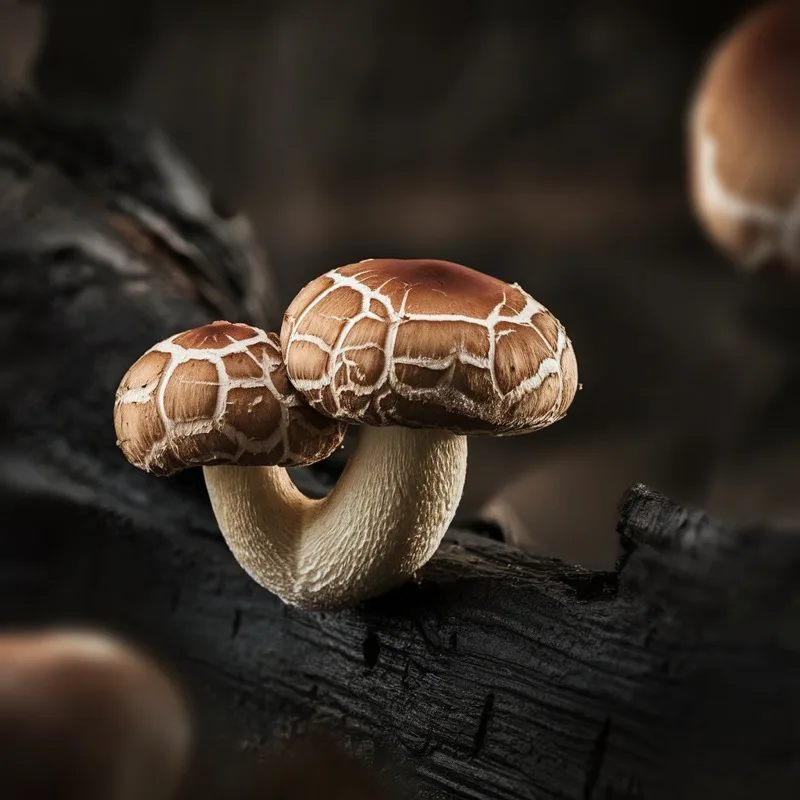
Lentinula edodes

Board-Certified Physician · Medical Reviewer · Last Reviewed February 12, 2026
Latin Name
Lentinula edodes
Research Level
Extensive
Popularity
#6 Ranked
Cited Studies
6 References
Lentinula edodes is a saprotrophic fungus belonging to the family Omphalotaceae, native to East Asia, where it thrives on decaying hardwood trees, particularly oak and other broad-leaved species. The fruiting body is characterized by a convex to flat, brown-colored cap ranging from 5 to 25 cm in diameter, with a distinctive scaly texture and white gills. Key pharmacological properties are attributed to its rich composition of bioactive compounds, including the polysaccharide lentinan — an approved adjunct immunotherapy in Japan — and eritadenine, which has demonstrated cholesterol-lowering effects in clinical studies.
💡 Key Insight
Shiitake is the only common edible mushroom that contains a pharmaceutical-grade immunological agent approved by a national government — lentinan, administered intravenously in Japanese hospitals as…
Shiitake is the only common edible mushroom that contains a pharmaceutical-grade immunological agent approved by a national government — lentinan, administered intravenously in Japanese hospitals as an adjunct to chemotherapy. That a mushroom most people know from stir-fry has produced a rigorously validated pharmaceutical is one of the most interesting convergences of food culture and medicine in modern history. The line between food and medicine, at least with mushrooms, is substantially blurrier than Western categorization typically allows.
Shiitake (Lentinula edodes) is the world's second most consumed mushroom, cultivated at over 10 million metric tons annually. Native to East Asia, it grows on fallen hardwood — oak, chestnut, beech. The fruiting body is classic: a convex brown cap with scaly texture, cream gills, and firm white stipe. Dried Shiitake concentrate in flavor through conversion of lentinic acid to lenthionine — producing that characteristic smoky, caramel-mushroom aroma.
Shiitake has been cultivated in China for at least 800 years — the first record dates to 1209 AD. What makes it exceptional is that it bridges the food-medicine divide uniquely: a 2015 randomized intervention by Dai et al. found healthy adults who ate 5–10g dried Shiitake daily for four weeks showed significant immune improvements — increased gamma-delta T-cells and reduced inflammatory CRP. No extract, no capsule — just cooked mushrooms as food.
⚡ Key Fact
Shiitake contains eritadenine — a unique amino acid derivative found almost exclusively in this species — that lowers LDL cholesterol by inhibiting SAH hydrolase in the methylation cycle. Animal studies show 25–45% reductions in total cholesterol. No other mushroom contains meaningful eritadenine levels.
Shiitake's pharmacology centers on three compound classes. Lentinan is a beta-1,3-glucan with a specific triple-helix structure that activates macrophages, NK cells, and T-lymphocytes through complement receptor 3 and dectin-1. The triple-helix conformation confers receptor selectivity and potency that straight-chain beta-glucans lack. Eritadenine inhibits SAH hydrolase, disrupting lipid metabolism to reduce LDL cholesterol formation.
The vitamin D story adds another dimension: Shiitake contains ergosterol that dramatically increases when exposed to UV light. A single cup of UV-exposed dried Shiitake provides over 1,000 IU of vitamin D2 — valuable for people in low-sunlight environments. The 2024 Xu et al. study identified five new anti-inflammatory compounds, suggesting the pharmacological profile continues to expand.
💊 Recommended Dosage
For dietary consumption: 50–100g fresh or 5–10g dried Shiitake daily (per the Dai 2015 trial). For supplements: 1,000–3,000 mg/day of fruiting body extract. Food-first approach is strongly supported — cook thoroughly to avoid Shiitake dermatitis risk. Use the soaking liquid from rehydrating dried mushrooms (it's packed with polysaccharides).
Origin
East Asia (China, Japan, Korea)
Taste Profile
Rich umami, smoky caramel
Primary Use
Immune support
Used Since
Cultivated in China for 800+ years (since 1209 AD)
Also Known As
Xianggu
Best Form
Fresh/dried culinary + extract
Verified supplements featuring Shiitake — ranked by quality and value


Based on available research evidence
Based on available research evidence
Based on available research evidence
Based on available research evidence
⚠️ Important: These statements have not been evaluated by the FDA. Functional mushrooms are not intended to diagnose, treat, cure, or prevent any disease. Consult with a healthcare provider before starting any new supplement.
Bioactive compound with potential health benefits. Consult scientific literature for detailed information.
Bioactive compound with potential health benefits. Consult scientific literature for detailed information.
Bioactive compound with potential health benefits. Consult scientific literature for detailed information.
Shiitake has been used in traditional medicine systems for centuries, particularly in Traditional Chinese Medicine (TCM) and other Asian healing practices.
📖 Historical Context: Traditional use does not guarantee efficacy or safety. Modern research is ongoing to validate traditional claims and understand mechanisms of action.
Shiitake has been extensively studied in both preclinical and clinical research. Multiple human trials have investigated its potential benefits.
Research Areas: Studies have focused on immunity, metabolism, heart health, and other potential applications. Results are promising but more high-quality human trials are needed.
The following studies have been reviewed and cited by our medical team to support the claims on this page.
Bisen, P. S., Baghel, R. K., Sanodiya, B. S., Thakur, G. S., & Prasad, G. B. K. S. (2010). Lentinus edodes: a macrofungus with pharmacological activities. Current Medicinal Chemistry, 17(22), 2419-2430.
This review summarizes the various medicinal uses of Lentinus edodes, including its role in treating diseases related to depressed immune function, cancer, and heart disease, highlighting key bioactive compounds like lentinan and eritadenine.
Xu, X., Yu, C., Liu, Z., Cui, X., Guo, X., & Wang, H. (2024). Chemical Composition, Antioxidant and Anti-Inflammatory Activity of Shiitake Mushrooms (Lentinus edodes). Journal of Fungi, 10(8), 552.
This study identified five new compounds from Shiitake mushrooms and highlighted the anti-inflammatory and antioxidant properties of several compounds, suggesting their potential for development as health-promoting agents.
Dai, X., Stanilka, J. M., Rowe, C. A., et al. (2015). Consuming Lentinula edodes (Shiitake) Mushrooms Daily Improves Human Immunity: A Randomized Dietary Intervention in Healthy Young Adults. Journal of the American College of Nutrition, 34(6), 478-487.
This randomized dietary intervention demonstrated that daily consumption of Shiitake mushrooms for four weeks improved immune function in healthy young adults, as evidenced by increased gamma-delta T-cell proliferation and reduced inflammatory markers.
1. Int J Mol Sci. 2023 Jun 14;24(12):10120. doi: 10.3390/ijms241210120.
Study on Lentinula edodes health benefits published on PubMed (PMID: 37373268)
1. Front Oncol. 2022 Jun 22;12:881902. doi: 10.3389/fonc.2022.881902. eCollection
Study on Lentinula edodes health benefits published on PubMed (PMID: 35814366)
1. Foods. 2025 Feb 22;14(5):741. doi: 10.3390/foods14050741.
Study on Lentinula edodes health benefits published on PubMed (PMID: 40077445)
📋 Methodology: References are sourced from PubMed, major mycology journals, and peer-reviewed medical literature. Each entry is reviewed by Dr. Igor I. Bussel, M.D. for accuracy and clinical relevance.
Board-Certified Physician · Medical Reviewer
Board-certified physician affiliated with UC Irvine, the Gavin Herbert Eye Institute, and the UCI School of Medicine. Dr. Bussel reviews all mushroom encyclopedia entries for scientific accuracy, ensuring claims are supported by peer-reviewed research.
Last reviewed: February 12, 2026
Discover more functional mushroom species
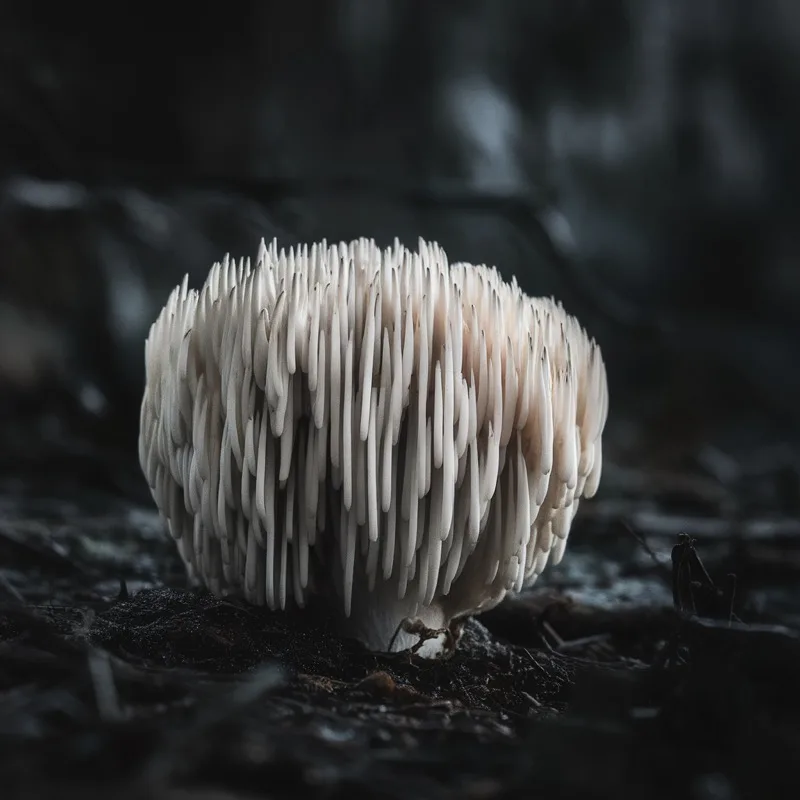
Hericium erinaceus
Hericium erinaceus is a saprotrophic fungus of the family Hericiaceae, commonly found on dead or wounded hardwood trees in North America, Europe, and Asia. Its morphology is characterized by a large, irregular, bulbous fruiting body with long, dangling spines, lacking a distinct cap or stipe. Key pharmacological properties are attributed to its unique bioactive compounds, including hericenones and erinacines, which have demonstrated neuroprotective and neurotrophic effects by stimulating nerve growth factor (NGF) synthesis in preclinical and clinical studies.
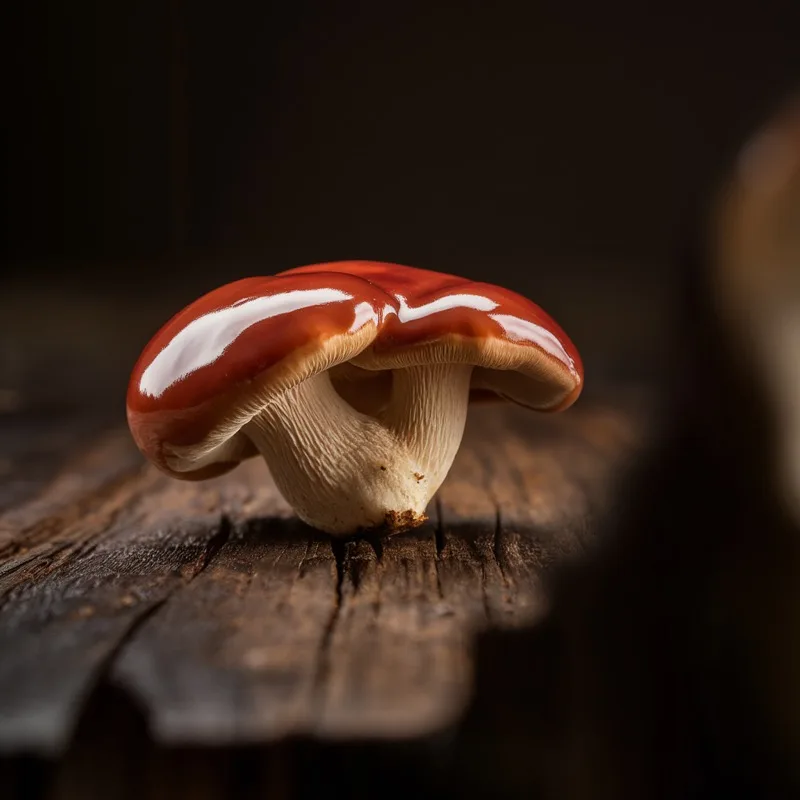
Ganoderma lucidum
Ganoderma lucidum is a polypore basidiomycetous fungus belonging to the family Ganodermataceae, characterized by its laccate cap surface and double-walled basidiospores. This large, woody mushroom thrives in hot and humid subtropical climates, growing on decaying hardwood, and is identified by its distinct red-varnished, fan-like or kidney-shaped cap. Its key pharmacological properties include immunomodulation, hepatoprotection, and adaptogenic effects, primarily mediated by its rich content of polysaccharides and over 130 identified triterpenoid compounds.
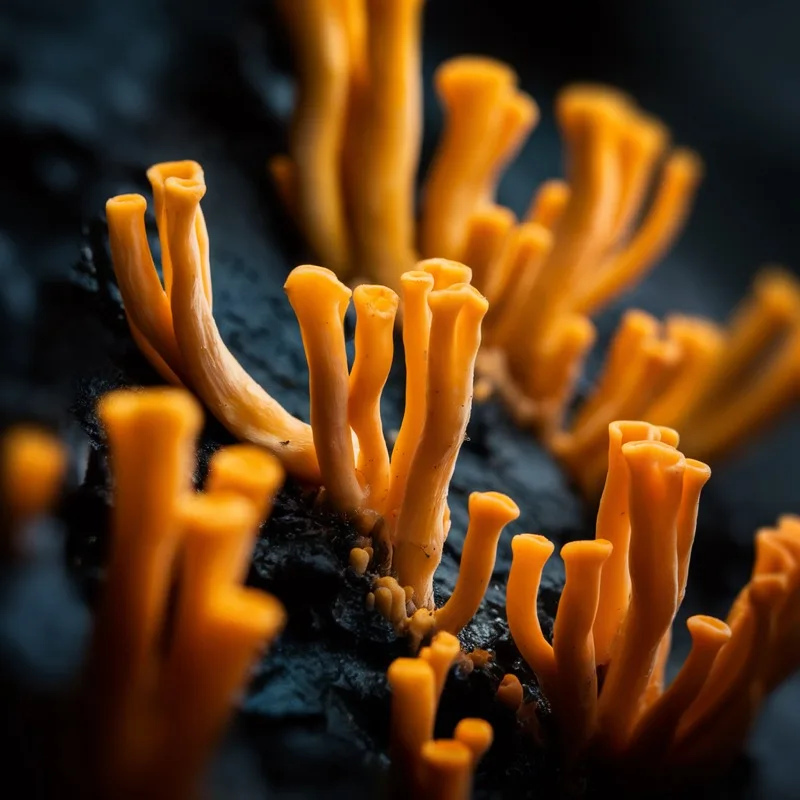
Cordyceps militaris
Cordyceps militaris is a parasitic ascomycete fungus belonging to the phylum Ascomycota, which primarily grows on the pupae of insects in the Northern Hemisphere. It is characterized by its bright orange-red, club-shaped fruiting body that emerges from the deceased host. This fungus is a source of several bioactive compounds, most notably cordycepin (3'-deoxyadenosine) and adenosine, which are nucleoside analogs with demonstrated effects on cellular energy metabolism, oxygen utilization, and anti-inflammatory pathways.
Click anywhere or press Escape to close