
🏆 Editor's Pick 🏆

$55.00 $1.83/serving
View Review
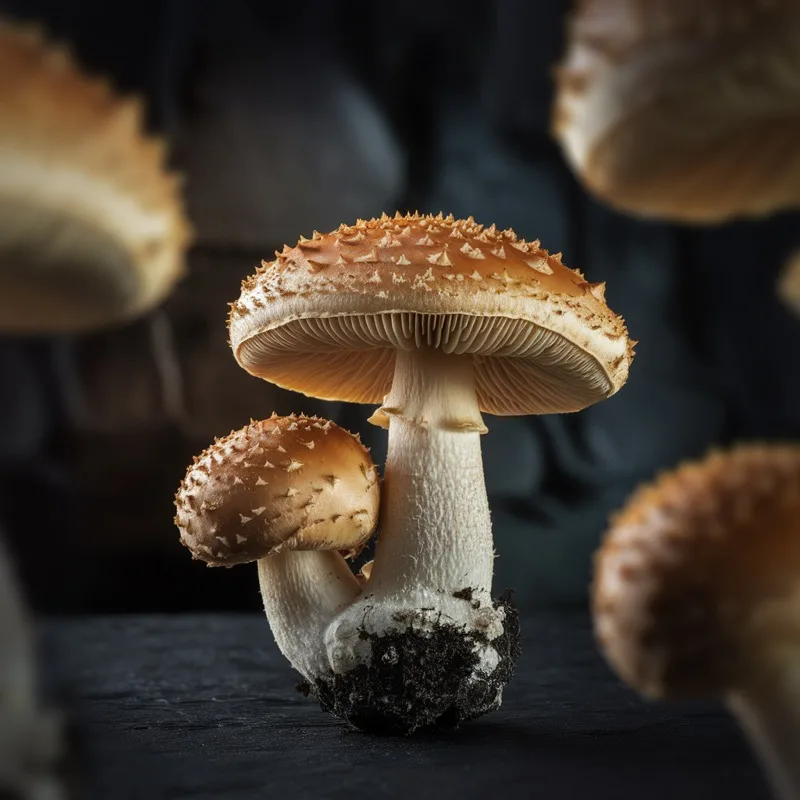
Agaricus blazei

Board-Certified Physician · Medical Reviewer · Last Reviewed February 12, 2026
Latin Name
Agaricus blazei
Research Level
Moderate
Popularity
#13 Ranked
Cited Studies
3 References
Agaricus subrufescens (syn. Agaricus blazei Murill) is a basidiomycete fungus belonging to the family Agaricaceae, native to the Atlantic forest highlands of Brazil. This saprophytic species thrives in humus-rich soils, characterized by a large, fleshy, brownish-gold convex cap, a short, stout stipe, and free lamellae that transition from pinkish to dark chocolate-brown as its smooth basidiospores mature. Key pharmacological properties are attributed to its rich composition of polysaccharides, particularly beta-glucans, which are responsible for its well-documented immunomodulatory, anti-inflammatory, and anti-tumor activities in both preclinical and clinical settings.
💡 Key Insight
In plain English, Royal Sun (also known as Himematsutake, God's Mushroom, or Cogumelo do Sol) is a stout, handsome mushroom with a golden-brown cap and thick white stem that's native to the Atlantic…
In plain English, Royal Sun (also known as Himematsutake, God's Mushroom, or Cogumelo do Sol) is a stout, handsome mushroom with a golden-brown cap and thick white stem that's native to the Atlantic rainforests of Brazil. It was relatively unknown outside of South America until Japanese researchers visiting Brazil in the 1960s noticed that communities consuming this mushroom regularly seemed to have remarkably low rates of certain diseases. That observation kicked off decades of research, particularly in Japan and Brazil, that established Royal Sun as one of the most studied medicinal mushrooms for immune support.
What sets Royal Sun apart is its exceptionally high beta-glucan content — some of the highest measured in any mushroom species. Beta-glucans are complex sugars that act as biological response modifiers, essentially training your immune system to be more alert and responsive. The research on Royal Sun's immunomodulatory effects is substantial, with multiple human clinical trials demonstrating its ability to enhance natural killer cell activity and modulate immune responses. In Japan, it became one of the most popular health supplements in the early 2000s, with annual sales reaching hundreds of millions of dollars.
Royal Sun has a pleasant almond-like aroma and a sweet, mild flavor — quite different from the earthy or bitter profiles of many other medicinal mushrooms. In Brazil, it's traditionally consumed in cooking, added to soups and stews, or brewed into teas. The Japanese developed more concentrated supplement forms and extensively studied its effects on immune function, allergy response, and overall vitality. Some clinical trials have also explored its potential to support liver health and blood sugar regulation.
You'll find Royal Sun in capsule form, as a dried powder, and occasionally as a tea. It's less widely available than mainstream mushrooms like Reishi or Lion's Mane, but quality products can be found from specialized functional mushroom brands. Typical dosages range from 1,000 mg to 3,000 mg per day of extract. Some people prefer whole dried Royal Sun mushrooms, which can be added to soups or rehydrated and cooked into various dishes.
When shopping for Royal Sun supplements, look for products that use the fruiting body and specify beta-glucan content. Hot water extraction is important for liberating the immune-active polysaccharides. Brazilian and Japanese manufacturers generally have the most experience cultivating this species, so products sourced from these regions may offer superior quality. Third-party testing is especially important given the higher price point of Royal Sun compared to more common mushroom supplements.
Royal Sun pairs well with other immune-supporting mushrooms in blended formulas — combining it with Turkey Tail, Maitake, and Reishi creates a comprehensive immune support stack. It's a particularly good choice for those specifically looking to support healthy immune function and who want a mushroom with a strong clinical research backing in that area.
Origin
Brazil (Piedade region)
Taste Profile
Almond-like, sweet, rich
Primary Use
Immune modulation
Used Since
Discovered in Brazil in the 1960s; highly valued in Japan
Also Known As
Agaricus blazei
Best Form
Hot water extract
Verified supplements featuring Royal Sun — ranked by quality and value


Host Defense
Based on available research evidence
Based on available research evidence
Based on available research evidence
⚠️ Important: These statements have not been evaluated by the FDA. Functional mushrooms are not intended to diagnose, treat, cure, or prevent any disease. Consult with a healthcare provider before starting any new supplement.
Bioactive compound with potential health benefits. Consult scientific literature for detailed information.
Complex carbohydrates that may support immune health and gut function.
Bioactive compound with potential health benefits. Consult scientific literature for detailed information.
Royal Sun has been used in traditional medicine systems for centuries, particularly in Traditional Chinese Medicine (TCM) and other Asian healing practices.
📖 Historical Context: Traditional use does not guarantee efficacy or safety. Modern research is ongoing to validate traditional claims and understand mechanisms of action.
Royal Sun has moderate research support with several preclinical studies and some human trials. More research is needed to confirm benefits.
Research Areas: Studies have focused on immunity, antioxidants, overall wellness, and other potential applications. Results are promising but more high-quality human trials are needed.
The following studies have been reviewed and cited by our medical team to support the claims on this page.
Ohno, S., Sumiyoshi, Y., Hashine, K., et al. (2011). Phase I clinical study of the dietary supplement, Agaricus blazei Murill, in cancer patients in remission. Evidence-Based Complementary and Alternative Medicine, 2011, 192381.
This phase I clinical trial investigated the safety of an Agaricus blazei Murill supplement in cancer survivors, finding that daily oral administration over six months was generally well-tolerated with only minor adverse effects.
Mahmood, F., Hetland, G., Nentwich, I., et al. (2019). Agaricus blazei-Based Mushroom Extract Supplementation to Birch Allergic Blood Donors: A Randomized Clinical Trial. Nutrients, 11(10), 2339.
In a randomized, placebo-controlled trial, pre-seasonal supplementation with an Agaricus blazei-based extract significantly reduced general allergy symptoms and medication use in birch pollen allergic individuals, with associated reductions in specific IgE levels.
Angeli, J. P., Ribeiro, L. R., Bellini, M. F., & Mantovani, M. S. (2009). Beta-glucan extracted from the medicinal mushroom Agaricus blazei prevents the genotoxic effects of benzo[a]pyrene in the human hepatoma cell line HepG2. Archives of Toxicology, 83(1), 81-86.
This in-vitro study demonstrated that beta-glucan isolated from Agaricus blazei exhibited a protective effect against DNA damage induced by the carcinogen benzo[a]pyrene in human liver cells, suggesting chemoprotective properties.
📋 Methodology: References are sourced from PubMed, major mycology journals, and peer-reviewed medical literature. Each entry is reviewed by Dr. Igor I. Bussel, M.D. for accuracy and clinical relevance.
Board-Certified Physician · Medical Reviewer
Board-certified physician affiliated with UC Irvine, the Gavin Herbert Eye Institute, and the UCI School of Medicine. Dr. Bussel reviews all mushroom encyclopedia entries for scientific accuracy, ensuring claims are supported by peer-reviewed research.
Last reviewed: February 12, 2026
Discover more functional mushroom species
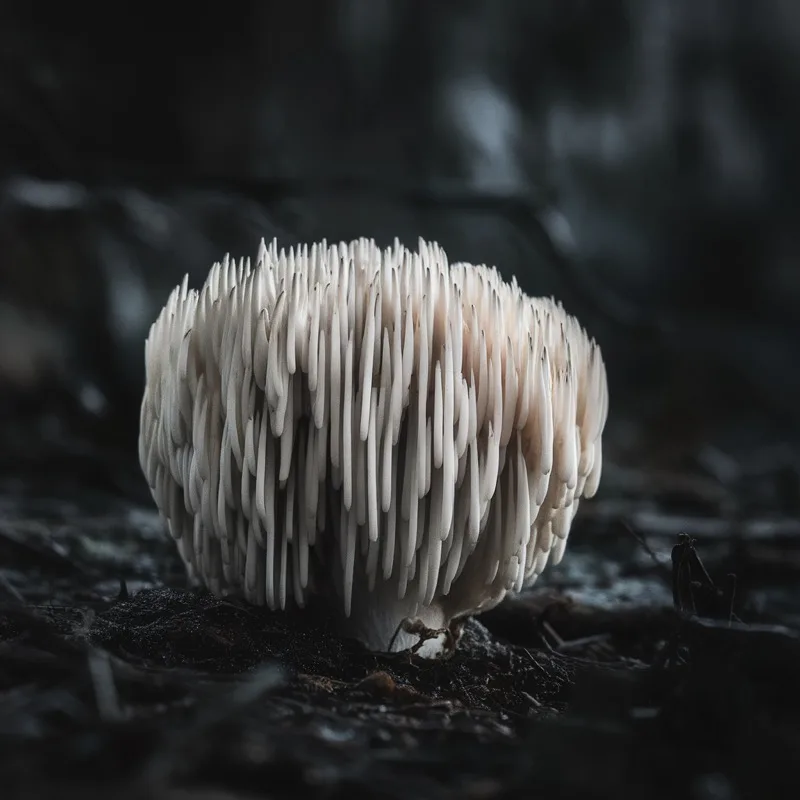
Hericium erinaceus
Hericium erinaceus is a saprotrophic fungus of the family Hericiaceae, commonly found on dead or wounded hardwood trees in North America, Europe, and Asia. Its morphology is characterized by a large, irregular, bulbous fruiting body with long, dangling spines, lacking a distinct cap or stipe. Key pharmacological properties are attributed to its unique bioactive compounds, including hericenones and erinacines, which have demonstrated neuroprotective and neurotrophic effects by stimulating nerve growth factor (NGF) synthesis in preclinical and clinical studies.
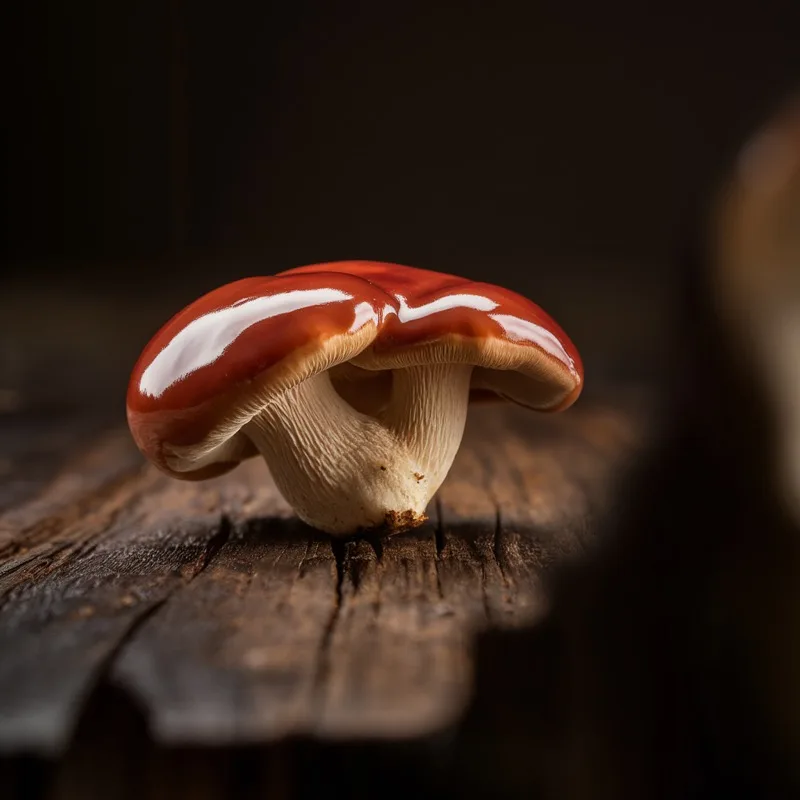
Ganoderma lucidum
Ganoderma lucidum is a polypore basidiomycetous fungus belonging to the family Ganodermataceae, characterized by its laccate cap surface and double-walled basidiospores. This large, woody mushroom thrives in hot and humid subtropical climates, growing on decaying hardwood, and is identified by its distinct red-varnished, fan-like or kidney-shaped cap. Its key pharmacological properties include immunomodulation, hepatoprotection, and adaptogenic effects, primarily mediated by its rich content of polysaccharides and over 130 identified triterpenoid compounds.
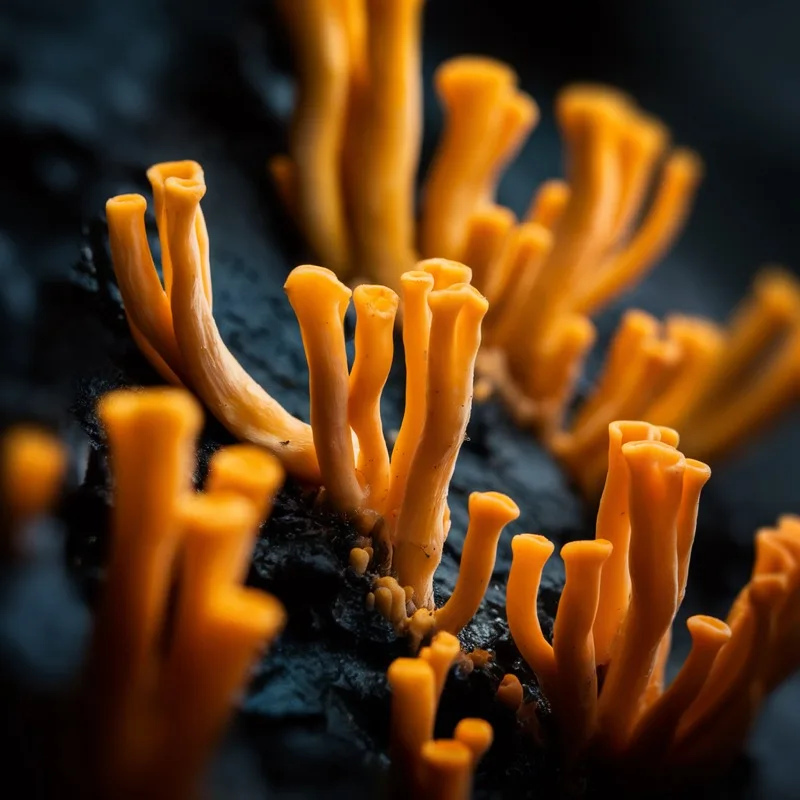
Cordyceps militaris
Cordyceps militaris is a parasitic ascomycete fungus belonging to the phylum Ascomycota, which primarily grows on the pupae of insects in the Northern Hemisphere. It is characterized by its bright orange-red, club-shaped fruiting body that emerges from the deceased host. This fungus is a source of several bioactive compounds, most notably cordycepin (3'-deoxyadenosine) and adenosine, which are nucleoside analogs with demonstrated effects on cellular energy metabolism, oxygen utilization, and anti-inflammatory pathways.
Click anywhere or press Escape to close