
🏆 Editor's Pick 🏆

$55.00 $1.83/serving
View Review
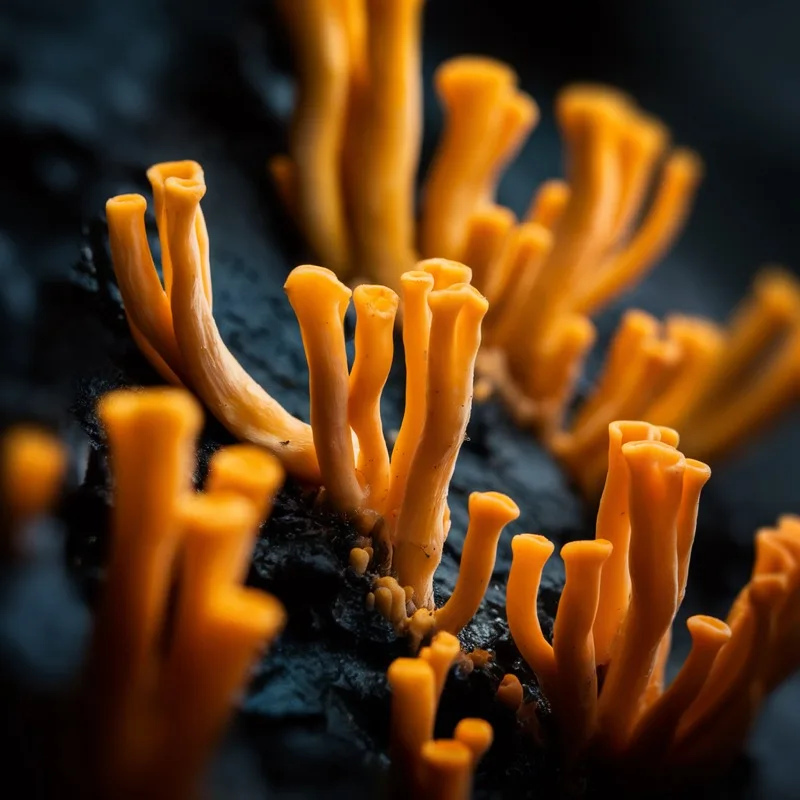
Cordyceps militaris

Board-Certified Physician · Medical Reviewer · Last Reviewed February 12, 2026
Latin Name
Cordyceps militaris
Research Level
Extensive
Popularity
#3 Ranked
Cited Studies
6 References
Cordyceps militaris is a parasitic ascomycete fungus belonging to the phylum Ascomycota, which primarily grows on the pupae of insects in the Northern Hemisphere. It is characterized by its bright orange-red, club-shaped fruiting body that emerges from the deceased host. This fungus is a source of several bioactive compounds, most notably cordycepin (3'-deoxyadenosine) and adenosine, which are nucleoside analogs with demonstrated effects on cellular energy metabolism, oxygen utilization, and anti-inflammatory pathways.
💡 Key Insight
In 1993, three Chinese female runners shattered multiple world records at the National Games — including the 10,000-meter run by over 40 seconds. Their coach attributed the performance to daily…
In 1993, three Chinese female runners shattered multiple world records at the National Games — including the 10,000-meter run by over 40 seconds. Their coach attributed the performance to daily consumption of Cordyceps sinensis. Doping authorities found nothing prohibited. Whether Cordyceps was truly responsible or a convenient cover story, the incident ignited Western scientific curiosity about a fungus that Tibetan herders had been feeding to yaks for centuries to enhance performance at altitude.
Cordyceps is a genus of parasitic fungi with a story that borders on science fiction. C. sinensis — the wild Himalayan species — infects ghost moth larvae at altitudes of 3,500–5,000 meters, slowly replacing body tissue, then sending a club-shaped fruiting body from the larva's head. Wild Cordyceps sells for $20,000–$40,000/kg, making it one of the most expensive biological commodities on Earth.
The supplement world uses Cordyceps militaris — a cultivated species with equal or higher concentrations of the key compound cordycepin. Grown commercially on rice or liquid substrates, C. militaris produces vivid orange-red fruiting bodies now grown worldwide. In Traditional Chinese Medicine, Cordyceps was used as a tonic for kidneys and lungs, to enhance vitality, and to support recovery — especially valued at high altitude where oxygen is limited.
⚡ Key Fact
Cordycepin (3'-deoxyadenosine) is structurally similar to adenosine — the backbone of ATP, your body's energy currency. It enhances mitochondrial efficiency, producing more ATP per unit of oxygen consumed. This is why Cordyceps works best where oxygen is the limiting factor.
Cordyceps' primary mechanism centers on cordycepin, a nucleoside analog that enhances mitochondrial oxidative phosphorylation — making the electron transport chain produce ATP more efficiently. More energy per oxygen molecule means better performance during intense exercise or at altitude. A second mechanism involves adenosine receptor modulation: cordycepin enhances vasodilation, improving oxygen delivery to working muscles.
The Hirsch et al. 2017 study (Journal of Dietary Supplements) found a mushroom blend with C. militaris significantly improved VO2 max and time to exhaustion after just one week. A 2020 study by Choi et al. demonstrated enhanced exercise performance attributable specifically to increased ATP production, not reduced fatigue perception.
💊 Recommended Dosage
1,500–3,000 mg/day of C. militaris fruiting body extract. Take 30–60 minutes before exercise for performance, or in the morning for general energy. Avoid late-afternoon dosing as cordycepin may interfere with sleep in sensitive individuals. Look for products specifying cordycepin content (0.1–0.5%) and ≥25% beta-glucans.
Origin
Tibetan Plateau, cultivated worldwide
Taste Profile
Mild, slightly nutty
Primary Use
Energy
Used Since
Used by Tibetan herders for centuries
Also Known As
Caterpillar Fungus
Best Form
C. militaris fruiting body extract
Verified supplements featuring Cordyceps — ranked by quality and value


Sacred Journey Chocolate


Based on available research evidence
Based on available research evidence
Based on available research evidence
Based on available research evidence
Based on available research evidence
⚠️ Important: These statements have not been evaluated by the FDA. Functional mushrooms are not intended to diagnose, treat, cure, or prevent any disease. Consult with a healthcare provider before starting any new supplement.
A nucleoside that may support energy production and cardiovascular health.
A unique nucleoside analog with potential energy-boosting and anti-inflammatory properties.
Complex carbohydrates that may support immune health and gut function.
Cordyceps has been used in traditional medicine systems for centuries, particularly in Traditional Chinese Medicine (TCM) and other Asian healing practices.
📖 Historical Context: Traditional use does not guarantee efficacy or safety. Modern research is ongoing to validate traditional claims and understand mechanisms of action.
Cordyceps has been extensively studied in both preclinical and clinical research. Multiple human trials have investigated its potential benefits.
Research Areas: Studies have focused on energy, stamina, athletic performance, and other potential applications. Results are promising but more high-quality human trials are needed.
The following studies have been reviewed and cited by our medical team to support the claims on this page.
Hirsch, K. R., Smith-Ryan, A. E., Roelofs, E. J., Trexler, E. T., & Mock, M. G. (2017). Cordyceps militaris Improves Tolerance to High-Intensity Exercise After Acute and Chronic Supplementation. Journal of Dietary Supplements, 14(1), 42-53.
This study found that a mushroom blend containing Cordyceps militaris improved tolerance to high-intensity exercise after both one and three weeks of supplementation, showing a significant improvement in VO2 max and time to exhaustion after three weeks.
Choi, E., Oh, J., & Sung, G. H. (2020). Beneficial Effect of Cordyceps militaris on Exercise Performance via Promoting Cellular Energy Production. Mycobiology, 48(6), 512-517.
This study on mice demonstrated that administration of a Cordyceps militaris extract enhanced exercise performance, likely due to an increase in ATP production rather than a reduction in muscle fatigue.
Hirsch, K. R., Mock, M. G., Roelofs, E. J., Trexler, E. T., & Smith-Ryan, A. E. (2015). Chronic supplementation of a mushroom blend on oxygen kinetics, peak power, and time to exhaustion. Journal of the International Society of Sports Nutrition, 12(S1), P45.
Chronic supplementation with a mushroom blend containing Cordyceps militaris was found to improve VO2 max and time to exhaustion in recreationally active subjects, suggesting enhanced aerobic performance and delayed fatigue through improved oxygen kinetics.
1. Proc (Bayl Univ Med Cent). 2022 Sep 15;35(6):802-807. doi:
Study on Cordyceps sinensis performance published on PubMed (PMID: 36304597)
1. J Int Soc Sports Nutr. 2018 Mar 15;15:14. doi: 10.1186/s12970-018-0218-y.
Study on Cordyceps sinensis performance published on PubMed (PMID: 29568244)
1. Arch Razi Inst. 2023 Apr 30;78(2):659-666. doi: 10.22092/ARI.2022.359478.2430.
Study on Cordyceps sinensis performance published on PubMed (PMID: 37396748)
📋 Methodology: References are sourced from PubMed, major mycology journals, and peer-reviewed medical literature. Each entry is reviewed by Dr. Igor I. Bussel, M.D. for accuracy and clinical relevance.
Board-Certified Physician · Medical Reviewer
Board-certified physician affiliated with UC Irvine, the Gavin Herbert Eye Institute, and the UCI School of Medicine. Dr. Bussel reviews all mushroom encyclopedia entries for scientific accuracy, ensuring claims are supported by peer-reviewed research.
Last reviewed: February 12, 2026
Discover more functional mushroom species
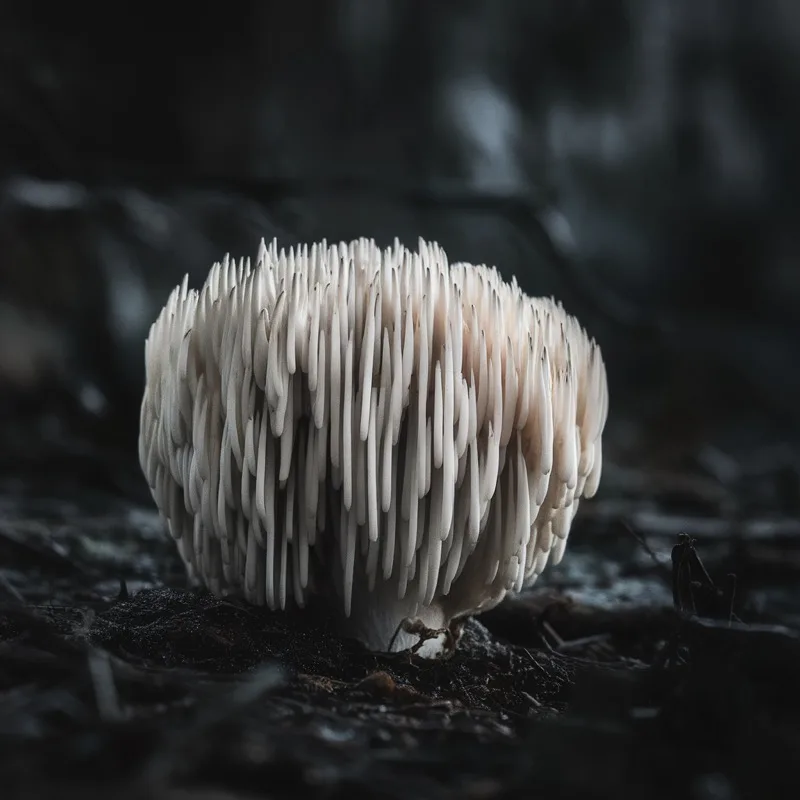
Hericium erinaceus
Hericium erinaceus is a saprotrophic fungus of the family Hericiaceae, commonly found on dead or wounded hardwood trees in North America, Europe, and Asia. Its morphology is characterized by a large, irregular, bulbous fruiting body with long, dangling spines, lacking a distinct cap or stipe. Key pharmacological properties are attributed to its unique bioactive compounds, including hericenones and erinacines, which have demonstrated neuroprotective and neurotrophic effects by stimulating nerve growth factor (NGF) synthesis in preclinical and clinical studies.
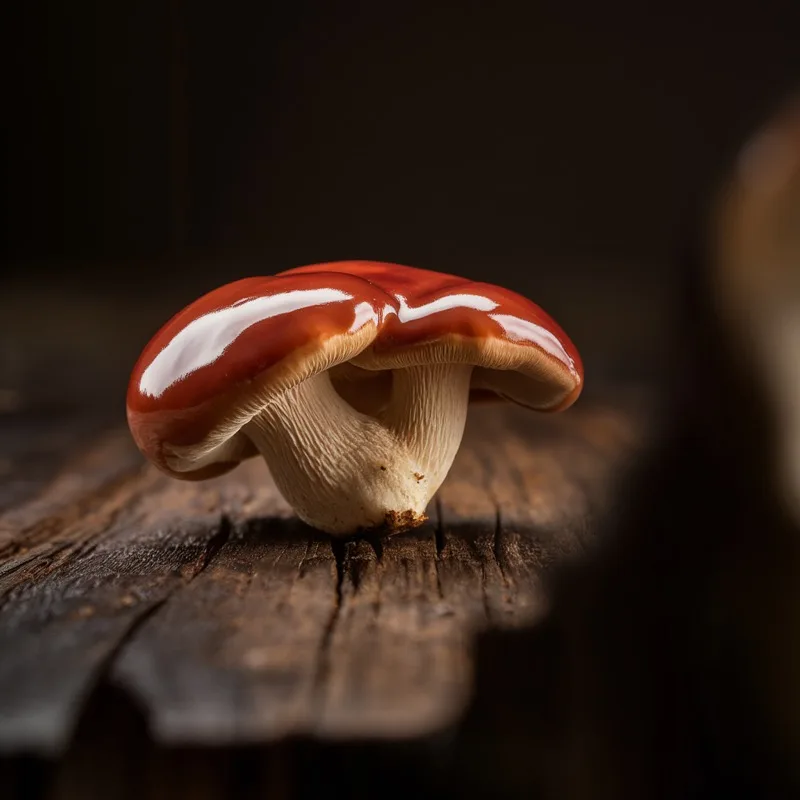
Ganoderma lucidum
Ganoderma lucidum is a polypore basidiomycetous fungus belonging to the family Ganodermataceae, characterized by its laccate cap surface and double-walled basidiospores. This large, woody mushroom thrives in hot and humid subtropical climates, growing on decaying hardwood, and is identified by its distinct red-varnished, fan-like or kidney-shaped cap. Its key pharmacological properties include immunomodulation, hepatoprotection, and adaptogenic effects, primarily mediated by its rich content of polysaccharides and over 130 identified triterpenoid compounds.
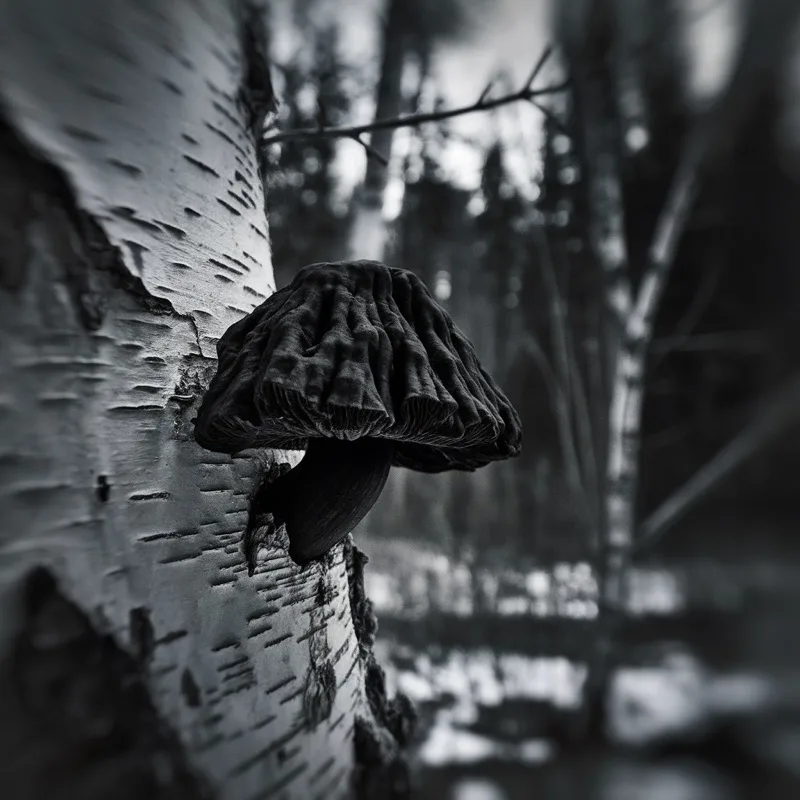
Inonotus obliquus
Inonotus obliquus is a parasitic fungus of the family Hymenochaetaceae, primarily found on birch trees in circumboreal forests. It presents as a sterile, black, and irregularly shaped sclerotium (mass of mycelium) rather than a true fruiting body, causing white heart rot in its host. This sclerotium is rich in melanin and contains various bioactive compounds, including polysaccharides, triterpenoids (betulin, betulinic acid, inotodiol), and polyphenols, which are responsible for its notable antioxidant, anti-inflammatory, and immunomodulatory properties.
Click anywhere or press Escape to close