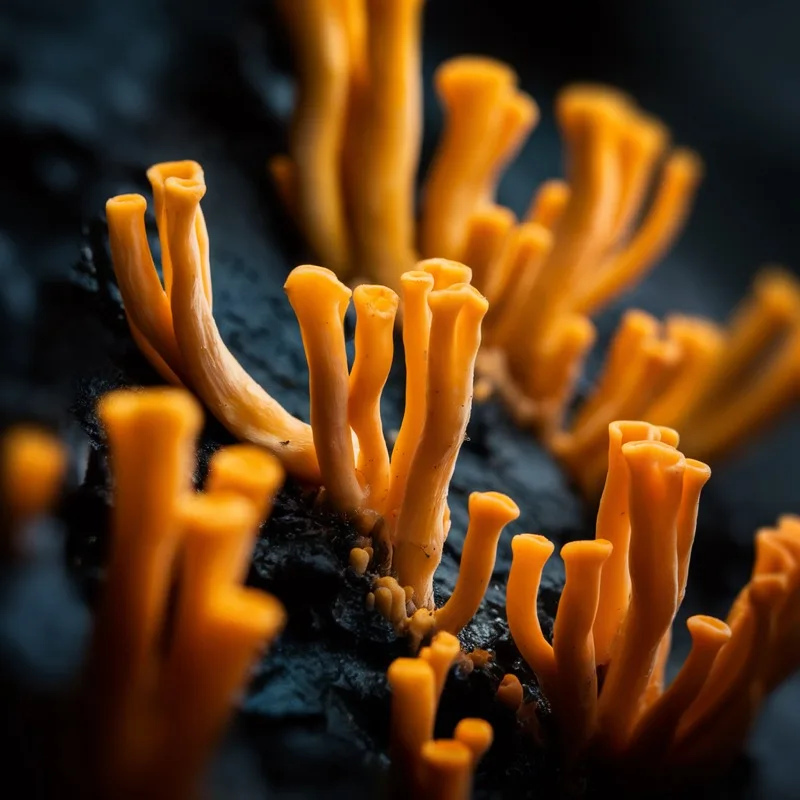
Turkey Tail is arguably the most clinically validated functional mushroom in the world — not because supplement companies funded the research, but because the Japanese government approved its key extract as a pharmaceutical in 1977 and has been covering it under national health insurance ever since. The compound, PSK (Polysaccharide-K), has been studied in hundreds of clinical trials, used in oncology for nearly 50 years, and is co-administered with standard cancer treatments at major hospitals throughout Japan and China.
What Is Turkey Tail?
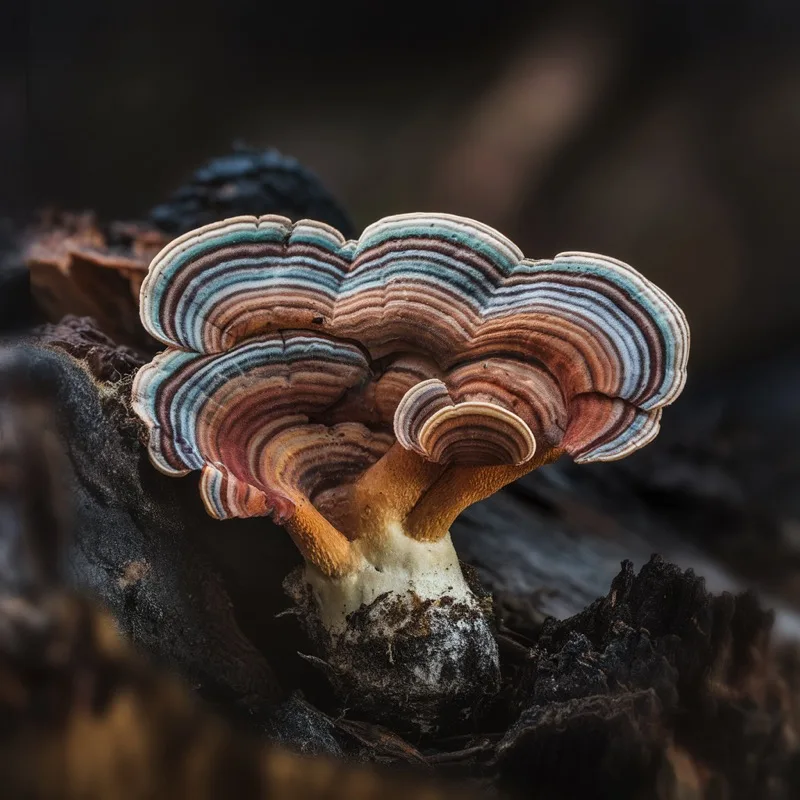
Turkey Tail (Trametes versicolor) is one of the most common mushrooms worldwide, growing on fallen logs in virtually every temperate forest. Thin, leathery, fan-shaped brackets with concentric bands of brown, tan, and cream — unmistakably similar to a wild turkey's tail feathers. Despite being common, it's not eaten as food — far too tough. Its medicinal value lies in water-soluble polysaccharides extracted through hot water brewing.
In Japan it's called "Kawaratake," in China "Yun Zhi" (cloud mushroom). Traditional uses consistently emphasized lung health, digestive support, and bolstering the body's defensive qi. The scientific chapter began when a Japanese chemical engineer noticed a neighbor's unusual cancer recovery after drinking Turkey Tail tea. His son's company isolated PSK, completed clinical trials, and won government approval by the 1970s. PSK is now prescribed to tens of thousands of cancer patients annually in Japan.
⚡ Key Fact
PSK (Polysaccharide-K) from Turkey Tail has been used as an approved adjunct cancer therapy in Japanese hospitals since 1977 — nearly 50 years of mainstream pharmaceutical use. Multiple meta-analyses show improved 5-year survival rates when PSK is added to conventional cancer treatment.
The Science: How It Works
Turkey Tail's two primary compounds are PSK and PSP (Polysaccharide-Peptide) — protein-bound polysaccharides that activate macrophages, dendritic cells, and NK cells through TLR-2 and dectin-1 signaling. PSK stimulates T-cell proliferation and enhances cytotoxic T-lymphocyte activity — the immune cells most responsible for targeting cancer cells. In clinical settings, PSK helps restore immune competence during post-treatment immune depression.
Beyond immunotherapy, Turkey Tail has significant prebiotic effects. A 2014 study by Talbott and Talbott demonstrated Turkey Tail significantly altered gut microbiome composition — increasing Bifidobacterium and Lactobacillus while reducing pathogenic species. Since gut microbiome composition profoundly influences immune function and mental wellbeing, this prebiotic dimension explains broader health effects beyond direct immunostimulation.
Proven Benefits
- ✓
Gut Health & Microbiome: Beta-glucans act as prebiotics feeding beneficial bacteria. The Talbott 2014 study found significant microbiome improvements after 8 weeks. Users report reduced bloating, better digestion, and more regular function.
- ✓
Immune System Modulation: The Torkelson 2012 Phase I trial found trends toward increased lymphocytes and NK cell activity in breast cancer patients. PSK and PSP activate both innate and adaptive immune pathways through well-characterized receptor mechanisms.
- ✓
Adjunctive Cancer Support: The most clinically documented application. PSK has been used alongside conventional cancer therapy in Japan for 45+ years with multiple large RCTs showing improved survival and reduced recurrence rates. Never a replacement — a clinically meaningful adjunct.
- ✓
Digestive Function: Prebiotic and anti-inflammatory effects on the gut lining support improved gut motility and food tolerance. Traditional uses consistently emphasized digestive benefits across independent cultures.
💊 Recommended Dosage
1,000–3,000 mg/day of fruiting body hot water extract. Japanese oncology uses PSK at 3,000 mg/day. For gut health, the lower range (1,000–2,000 mg/day) is typically sufficient. Hot water extraction is critical — PSK and PSP are water-soluble polysaccharides. Look for ≥30% beta-glucan content and specified fruiting body origin.
⚠️ Safety: Excellent safety record even in immunocompromised cancer patients. The Torkelson trial found no significant adverse effects at doses up to 9 g/day. Mild GI effects (nausea, diarrhea) possible at higher doses. Theoretically contraindicated for autoimmune conditions where immune activation could worsen symptoms. Consult a physician if on immunosuppressants.