In a 2009 randomized controlled trial, Japanese researchers gave older adults with mild cognitive impairment an extract of Hericium erinaceus for 16 weeks — and watched their test scores climb. Then they took the supplement away. Within four weeks, the scores fell back toward baseline. That reversibility finding is significant: it suggests Lion's Mane isn't producing a placebo effect or a one-time boost, but rather an ongoing biological intervention that requires continued use to maintain its effects.
What Is Lion's Mane?
Lion's Mane (Hericium erinaceus) is one of the most visually distinctive fungi on Earth. Rather than the classic cap-and-stem form, it grows as a cascading mass of long, white, needle-like spines hanging from a central mass attached to dead or wounded hardwood trees — oaks, beeches, and walnuts across North America, Europe, and Asia. A mature specimen can reach the size of a basketball.
In Traditional Chinese Medicine, Lion's Mane has been documented for at least two millennia under the name "Houtou" (monkey head mushroom), regarded as a tonic for the five organs. The Japanese name "Yamabushitake" connects it to ascetic mountain monks who incorporated the mushroom into meditation practices. As a culinary ingredient, its firm texture closely mimics lobster or crab when sautéed in butter — making it a star of vegetarian cooking. But it's the neurological potential that has made Lion's Mane the best-selling functional mushroom in North America.
⚡ Key Fact
Lion's Mane is the only known food source of hericenones and erinacines — compounds that cross the blood-brain barrier and directly stimulate Nerve Growth Factor (NGF) synthesis in the brain. No other food or herb does this.
The Science: How It Works
The neurological activity of Lion's Mane is driven by two families of bioactive compounds found almost exclusively in this species: hericenones (in the fruiting body) and erinacines (in the mycelium). Hericenones stimulate synthesis of Nerve Growth Factor (NGF) — a signaling protein neurons depend on for growth, maintenance, and new synaptic connections. Erinacines are small, lipophilic molecules capable of crossing the blood-brain barrier, allowing them to directly stimulate NGF synthesis within the central nervous system.
A 2019 study by Saitsu et al. in Biomedical Research found that 12 weeks of H. erinaceus extract (3g/day) significantly improved MMSE scores in older adults with mild cognitive impairment. A 2023 study by Martínez-Mármol et al. identified novel hericerin derivatives activating a "pan-neurotrophic pathway" in hippocampal neurons — meaning Lion's Mane may activate multiple overlapping neuroprotective pathways simultaneously. Most recently, Docherty et al. (2023) found that even a single acute dose significantly improved processing speed on the Stroop task in healthy young adults.
Proven Benefits
- ✓
Memory & Recall: The most well-documented benefit. The Saitsu 2019 RCT showed significant MMSE improvements at 12 weeks in older adults with mild cognitive impairment — and scores declined after stopping, confirming the effect was compound-dependent.
- ✓
Focus & Processing Speed: The Docherty 2023 study found acute improvements on the Stroop task after a single dose. Users describe a quieter, cleaner focus — more like turning down mental static than stimulant-driven intensity.
- ✓
Neuroprotection: Preclinical data shows erinacines may protect neurons from amyloid-beta plaques, reduce neuroinflammation, and promote hippocampal neurogenesis. Multiple clinical trials for neurodegenerative conditions are underway.
- ✓
Nerve Regeneration: Animal studies show H. erinaceus extracts accelerate recovery from peripheral nerve injury by promoting remyelination and axon regrowth.
- ✓
Mood Support: A 2010 double-blind study found women who consumed Lion's Mane for four weeks showed significant reductions in self-reported anxiety and depression versus placebo.
💊 Recommended Dosage
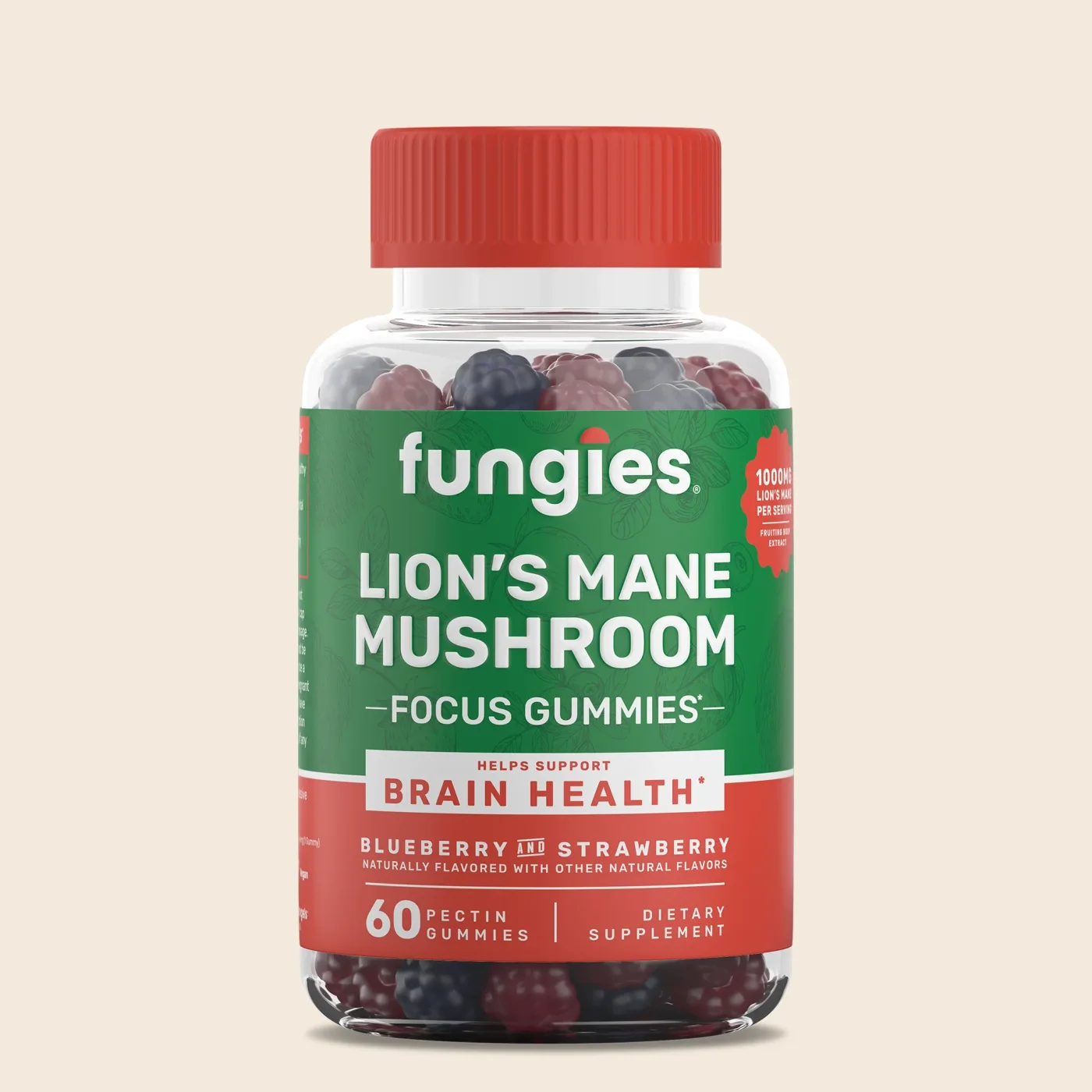
1,000–3,000 mg/day of standardized fruiting body extract. The Saitsu cognitive trial used 3,000 mg/day divided into three doses. Start at 500–1,000 mg/day and increase after 4–6 weeks if needed. Budget at least 4 weeks before evaluating, 8–12 weeks for a fair assessment. Look for products with ≥25% beta-glucan content and specified "fruiting body" on the label.
⚠️ Safety: Excellent safety record in clinical trials. No serious adverse events at doses up to 3,000 mg/day. Mild GI discomfort possible at higher doses — split doses or take with food. Start low if you have mushroom allergies. Consult your healthcare provider before use if pregnant, nursing, or on anticoagulant medications.