
Headshop vs Online: Where to Buy Mushroom Supplements
Pros and cons of buying mushroom supplements at local headshops versus online retailers. Price comparisons, quality considerations, and tips for both.

Board-Certified Physician · Medical Reviewer · Published January 25, 2026
📑 In This Article
- The Local Headshop Experience
- The Online Experience
- Price Comparison: Real Numbers
- The Hybrid Approach (Our Recommendation)
- How to Find Good Headshops
- How to Shop Smart Online
- The Bottom Line
- What the Research Shows About Product Quality Across Channels
- How to Not Get Scammed at Either Location
- Frequently Asked Questions
- The Rise of the Wellness Headshop
- Understanding the Full Supply Chain
- When to Use Each Channel: A Practical Decision Framework
- The Bottom Line on Buying Channels
You've decided to try mushroom supplements. Now comes the practical question: where do you actually buy them? The two main options — local headshops/supplement stores and online retailers — each have distinct advantages and drawbacks. Let's break it down.
The Local Headshop Experience
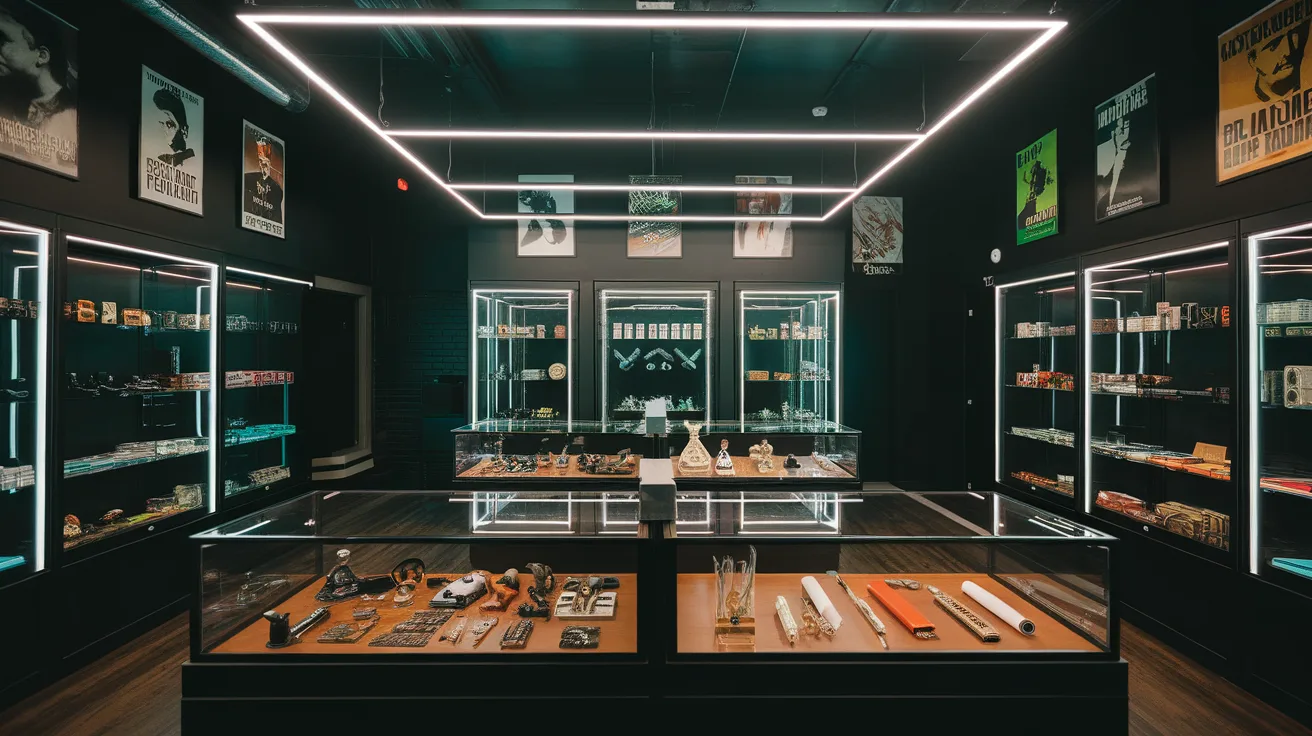
Walk into any major headshop chain in 2026 and you'll find an entire wall dedicated to mushroom products. Find headshops near you to see what's available in your area.
Pros of Buying Local
Instant gratification. You walk in, you walk out with product. No shipping wait, no tracking numbers, no porch pirates. If you're eager to start a new supplement, this matters.
See before you buy. You can physically examine the packaging, check the label, look for batch numbers, and verify that the product looks legitimate. This is harder to do with online photos.
Staff knowledge (sometimes). Good headshop employees can be surprisingly knowledgeable about mushroom products. They interact with customers daily, hear feedback, and often use the products themselves. Bad ones will just push whatever has the highest margin.
Support local business. Independent headshops are small businesses, and buying locally keeps money in your community.
Cons of Buying Local
Higher prices. This is the big one. Headshop markups on mushroom supplements typically range from 30-100% above online prices. A bottle of lion's mane capsules that costs $25 online might be $35-45 at a headshop. They have rent, staff, and overhead to cover.
Limited selection. Even the largest headshop can only carry a fraction of the brands available online. You might be limited to 5-10 brands, while online you have access to hundreds.
Quality inconsistency. Headshops stock products based on wholesale relationships and margins, not necessarily quality. Some of the most heavily distributed headshop brands are actually among the worst in terms of actual mushroom content. Many prioritize flashy packaging over actual extract quality.
Impulse buying. The in-store environment is designed to sell. You're more likely to grab something based on packaging or a sales pitch rather than researching ingredients and COAs.
The Online Experience
Online shopping gives you access to the entire mushroom supplement market from your couch. From brand-direct websites to Amazon to specialty retailers, your options are virtually unlimited.
Pros of Buying Online
Better prices. Direct-to-consumer brands can offer significantly lower prices because they've cut out the distributor and retailer middlemen. Subscription models often add another 15-25% discount.
Massive selection. Access to hundreds of brands, formulations, species blends, and formats. Want a dual-extracted 8:1 lion's mane concentrate with verified beta-glucan content above 35%? Online, you can find exactly that.
Research time. You can compare products, read reviews, check COAs, verify lab testing, and make an informed decision without a salesperson hovering. Use our comparison tool to evaluate products side by side.
COA access. Reputable online brands almost always publish their Certificates of Analysis on their website. You can verify beta-glucan content, heavy metals levels, and microbial testing before purchasing.
Subscribe and save. Many online brands offer subscription pricing that's 15-25% below retail, with free shipping and automatic delivery. Perfect for supplements you take daily.
Cons of Buying Online
Shipping wait. Standard shipping is typically 3-7 business days. Expedited shipping adds cost. If you're out of your daily supplement, waiting isn't fun.
Can't inspect before buying. You're relying on photos, descriptions, and reviews. Counterfeit or mislabeled products exist on marketplace platforms like Amazon.
Information overload. The sheer number of options can be paralyzing. Without a guide, choosing between 50+ lion's mane products is overwhelming.
Return hassles. If a product doesn't work for you, returns can be complicated, especially for opened supplements.
Price Comparison: Real Numbers
Here's what we typically see when comparing identical or equivalent products:
| Product Type | Headshop Price | Online Price | Savings |
|---|---|---|---|
| Lion's Mane Capsules (60ct) | $35-45 | $20-30 | 25-40% |
| Mushroom Gummies (30ct) | $25-40 | $18-28 | 20-35% |
| Mushroom Coffee (30 servings) | $30-50 | $22-35 | 20-30% |
| Amanita Gummies (10ct) | $20-35 | $15-25 | 20-30% |
| Multi-Mushroom Tincture | $35-55 | $25-40 | 20-35% |
Note: Prices vary by region and brand. These are approximate ranges based on our market research.
The Hybrid Approach (Our Recommendation)
Here's what we actually recommend: use both channels strategically.
Buy at Headshops When:
- You need something today (out of stock, just starting)
- You want to try a small quantity before committing to a full online order
- You're exploring a new product category and want hands-on guidance
- You're buying amanita muscaria products (where seeing the actual packaging and lab testing info before purchase is extra important)
Buy Online When:
- You know what you want and want the best price
- You're stocking up on a product you already trust
- You want a specific brand not carried at local shops
- You're setting up a subscription for daily supplements
How to Find Good Headshops
Not all headshops are equal. Use our headshop finder to locate stores near you, and look for:
- Stores that carry multiple brands (not just one house brand)
- Staff who can tell you about extraction methods and COAs
- Shops that have been in business for 5+ years (established reputation)
- Stores with good Google reviews mentioning mushroom/supplement selection
You can also browse our headshop chain directory and online headshop listings for curated options.
How to Shop Smart Online
- Buy direct from brands when possible (avoid third-party marketplace sellers)
- Check for COAs on the product page before purchasing
- Read actual reviews — look for detailed reviews mentioning specific effects, not just 5-star "great product!" posts
- Compare using tools — our comparison feature lets you evaluate products across dozens of criteria
- Look for subscription discounts if you plan to use a product ongoing
- Check the brand's reputation in our brand directory
The Bottom Line
Both channels serve a purpose. Headshops win on convenience and tactile experience; online wins on price, selection, and information access. The smartest consumers use headshops for exploration and online for ongoing purchasing. Wherever you buy, always prioritize quality verification — a cheap supplement that doesn't actually contain meaningful mushroom extract is no bargain at all.
What the Research Shows About Product Quality Across Channels
Let me give you actual data rather than just opinions. Studies analyzing functional mushroom supplements sold at retail versus specialty online brands consistently show significant quality disparities.
A 2017 analysis by Nammex tested 10 commercial lion's mane products — a mix of retail and online. Beta-glucan content ranged from 0.6% to 43%. That's a 70-fold difference in actual medicinal compound content. The 0.6% products were effectively placebos; the 43% products represented genuine medicinal dosing. The correlation with price? Minimal. Some of the most expensive products had the worst content.
The reason headshop products often underperform: distribution economics. A product needs to generate margin for manufacturer → distributor → headshop → you. At each step, margin gets squeezed. The easiest place to cut costs without immediate consumer impact is raw material quality. Mycelium-on-grain costs $5/kg wholesale; quality fruiting body extract costs $60-200/kg. Brands selling through headshop distribution have strong economic pressure toward cheap material. Direct-to-consumer online brands skip the distributor and retail markup, giving them more margin to invest in raw material quality while maintaining competitive prices.
How to Not Get Scammed at Either Location
Whether buying in-store or online, the protection protocol is the same. Step 1: Check the label for "fruiting body," extraction method mentioned, beta-glucan percentage. Step 2: Find or request the COA — third-party ISO-accredited lab, within 12-18 months, beta-glucan ≥20%, heavy metals panel. Step 3: Taste test when possible — real reishi is intensely bitter, real lion's mane extract dissolves dark in water. Full COA verification process in our COA reading guide.
Frequently Asked Questions
Do headshops typically carry the same brands as online retailers?
Generally not. Brands using distributor-to-retail channels and direct-to-consumer brands occupy different market segments. Premium quality brands focused on COA transparency mostly don't sell through headshop distribution because the margin structure doesn't support their cost structure. Use our headshop finder to locate shops that specifically merchandise quality functional mushroom products, and check our smartshops directory for wellness-focused specialty stores with better selections.
Is there a quality difference between smoke shops and health food stores?
Generally yes. Dedicated health food stores apply stricter sourcing standards to their supplement buyers. Many modern specialty headshops have upgraded significantly — a curated wellness headshop in 2026 may have better options than a pharmacy supplement aisle. Calling ahead to ask about COA availability and specific brand sourcing is your quality filter. A shop whose staff knows what a COA is and can access one for a product is a shop that takes quality seriously.
What about buying mushroom supplements at the gym or through a personal trainer?
Apply the same criteria anywhere. Some gyms carry legitimate products. Many carry heavily marketed sports nutrition brands exploiting the "mushroom" trend. Trusting relationships with trainers don't guarantee product quality. Check the label. Find the COA. The quality standards don't change based on who's selling it.
Can I trust online reviews?
With caveats. Subscription product reviews skew positive because unhappy customers just cancel. Amazon reviews are susceptible to manipulation. Verified purchase reviews with specific detailed accounts of effects are more reliable than generic 5-star ratings. Community forums (Reddit r/nootropics, r/FunctionalMushrooms) provide less commercially biased feedback. ShrooMap's ratings incorporate lab testing data unavailable from consumer reviews alone. Use our comparison tool for analysis beyond star ratings.
How do I find quality headshops near me?
Our headshop finder maps verified retail locations carrying functional mushroom products. Filter by region and look for shops specifically merchandising functional wellness products. Calling ahead to ask about brands and whether staff can access COA documentation is an effective quality filter. Our smartshops directory covers wellness-focused specialty stores that often have better selections and more knowledgeable staff than traditional headshops.
What's the actual price difference between headshop and online?
On average, online prices are 20-40% lower than headshop prices for equivalent products. Over a year of daily supplementation — say $35/month vs $50/month — that's $180 in annual savings. Add the typical 15-25% subscription discount that most quality brands offer, and the gap widens further. Use headshops for exploration and emergency restocking; use online for regular purchasing and subscribe for the additional subscription discount on products you take daily.
The Rise of the Wellness Headshop
The headshop category is undergoing a transformation worth understanding. The traditional headshop — smoke shop focused primarily on tobacco and cannabis accessories — has increasingly evolved into a broader wellness retail category, particularly in the post-2020 period when functional mushrooms and nootropics became mainstream. Understanding this evolution helps you identify which local shops are likely to have quality products versus which are still primarily oriented toward low-margin, high-volume sales of gas-station-grade supplements.
The best modern wellness headshops have sophisticated buyers who research brands, demand COA documentation from their suppliers, understand the difference between fruiting body and mycelium-on-grain products, and curate their selection based on quality rather than just what's available from their distributor's catalog. These shops often have staff who are themselves users of the products they sell — they can speak from personal experience about what works and what doesn't. When you find one of these shops, they're genuinely valuable resources.
The worst shops in the space are still primarily focused on selling whatever carries the highest margin and comes in the flashiest packaging. They may have expanded from tobacco accessories into functional mushrooms because the category is profitable, but their buying decisions are driven by distributor relationships and margin rather than quality criteria. The beautiful packaging and impressive scientific-sounding language on the label can mask products with negligible active compound content.
How to tell which type you're in: ask a staff member "what's the beta-glucan content of this product?" or "is this fruiting body or mycelium extract?" If they can answer these questions fluently and specifically — not just reading the label back to you but actually explaining what the difference means — you're in a quality shop. If they look confused or give you a vague non-answer, assume the shop is not specialized in functional mushroom quality.
Our headshop finder helps you locate options in your area. Our smartshops directory covers the specialized wellness retail category that has emerged between traditional headshops and health food stores — often the best in-person options for functional mushroom products. Combine these with our COA verification guide to make informed decisions regardless of where you're buying.
Understanding the Full Supply Chain
To make smart buying decisions, it helps to understand how functional mushroom supplements actually move from farm to shelf, because the supply chain structure directly explains why quality varies so dramatically across channels.
Most functional mushrooms sold in Western markets originate in China (specifically the provinces of Shandong, Zhejiang, and Fujian for cultivated species) or are wild-harvested in Siberia and Eastern Europe (chaga) or the Tibetan Plateau (cordyceps sinensis). The raw material moves from farms or wild harvesters to extraction facilities, then to ingredient brokers (companies that sell standardized mushroom extracts), then to supplement manufacturers who formulate into capsules, powders, or gummies, then to distributors or direct to retailers.
At each step in this chain, quality can degrade or be misrepresented. The most critical quality junctures: the extraction facility (does it actually use hot water extraction and produce verified beta-glucan content, or is it producing MOG powder labeled as extract?) and the supplement manufacturer (does it test the incoming raw materials and the finished product, or does it just assume the ingredient broker provided what the certificate claims?).
The best consumer products — those that consistently produce strong COA results — come from brands that either vertically integrate (owning the extraction step themselves) or have long-term direct relationships with specific extraction facilities whose quality they independently verify. When a brand can tell you specifically which farms their mushrooms come from, which extraction facility processes them, and provides batch-specific COAs from third-party labs, they've done the supply chain transparency work that makes trust possible.
Brands that buy generic bulk extract from ingredient brokers and put their label on it are operating a different model — lower investment, lower control, higher quality variability. Some of these products are fine; others are not. Without supply chain transparency, you can only verify the finished product through COA testing — which is why the COA habit matters so much, and why brands that resist COA transparency are so problematic. Use our comparison tool to find brands with supply chain transparency, and our headshop finder and smartshops directory to locate retailers who carry them in person.
When to Use Each Channel: A Practical Decision Framework
After all the analysis, here's a practical decision framework for when to use each channel based on your specific situation:
Use a headshop when: You want to try something before committing to a monthly online subscription. You need something today and can't wait for shipping. You prefer to see and potentially test a product before purchasing (some shops allow opening capsules to smell or taste). You're in an area with excellent specialty wellness retailers where the staff can answer your quality questions. You're new to functional mushrooms and want to browse what's available before deciding on specific species or products.
Use direct-to-consumer online when: You've identified your preferred species and brands and want the best pricing with subscription discounts. You need access to the most transparency on COA documentation and sourcing. You want the widest selection of quality products from brands that don't sell through traditional retail channels. You're buying at therapeutic doses (which require larger quantities than a trial purchase) and cost efficiency matters.
Use ShrooMap when: You want curated options with quality criteria already evaluated. You want side-by-side comparisons of products or brands. You want to find quality headshops or smartshops in your area. You want to understand which product formats work best for specific health goals. Our capsules, gummies, tinctures, and mushroom coffee categories all filter for quality-verified products, and our comparison tools make it easy to evaluate options side by side without doing all the research yourself.
The functional mushroom market is large enough and growing fast enough that both great and terrible products exist at every price point in every channel. The differentiator isn't where you buy — it's whether you verify what you're buying. A $60 bottle of lion's mane capsules from a direct-to-consumer online brand can be excellent or terrible. A $30 bottle from your local wellness shop can be the same. The COA is the equalizer. Learn to read it, use it consistently, and you'll navigate any channel with confidence.
The Bottom Line on Buying Channels
After all the analysis, the simplest version: the channel matters less than your verification practice. A quality product bought from a well-run headshop beats a mediocre product bought from a reputable-looking online brand. The verification framework — COA, beta-glucans, fruiting body, third-party testing — is your equalizer across all channels.
That said, if you're optimizing for both quality and cost, the general pattern holds: direct-to-consumer online brands with subscription discounts offer the best combination of quality, transparency, and price for regular purchases. Specialty headshops and smartshops offer the best combination of in-person experience, immediate availability, and the ability to ask quality questions face-to-face. Standard retail (pharmacies, gyms, convenience stores) offers the worst average quality and should be your last resort except for emergency restocking.
Use ShrooMap's tools to shortcut the research: our curated categories have done the quality filtering so you're starting from a vetted set of options rather than the full market. Our headshop finder and smartshops directory help you locate quality in-person options in your area. Our comparison tools make side-by-side product evaluation fast. And our buying guides — including this one — give you the framework to make good decisions independently of our curation wherever you end up buying. Build your verification habit, use it consistently, and you'll never overpay for oat powder again.
Tags
Medically Reviewed By
Dr. Igor I. Bussel, MD
Board-certified physician affiliated with the University of California, Irvine (UCI), the Gavin Herbert Eye Institute, and the UCI School of Medicine.
Related Articles


⚖️ Product Comparisons
Explore the Mushroom World
Dive deeper into species profiles, compare products, and find stores near you.