
Chaga vs Reishi: Which Immune-Boosting Mushroom Is Right for You?
A detailed comparison of chaga and reishi mushrooms — their bioactive compounds, health benefits, best use cases, and how to decide which one fits your goals.

Board-Certified Physician · Medical Reviewer · Published February 11, 2026
📑 In This Article
- Quick Comparison: Chaga vs Reishi at a Glance
- What Is Chaga?
- What Is Reishi?
- Immune Support: Two Mushrooms, Two Approaches
- Beyond Immunity: Unique Benefits of Each
- Side Effects and Safety Considerations
- Dosage and How to Take Them
- Can You Take Chaga and Reishi Together?
- Quality Matters: What to Look For
- Who Should Take What? Decision Guide
- The Bottom Line
- How to Stack Them Together
- Quick Reference: Who Should Take Which
- Frequently Asked Questions
- The Evidence Summary: Where Each Species Stands
Chaga and reishi are two of the most popular functional mushrooms on the market — and for good reason. Both have centuries of traditional use, growing bodies of scientific research, and passionate followings. But they're fundamentally different organisms with different strengths, and choosing the wrong one for your goals means leaving benefits on the table.
This guide breaks down exactly how chaga and reishi compare — their bioactive compounds, what the research actually says, side effects, and who should take which one.
Quick Comparison: Chaga vs Reishi at a Glance
| Feature | Chaga | Reishi |
|---|---|---|
| Latin Name | Inonotus obliquus | Ganoderma lucidum |
| Primary Benefits | Antioxidant, immune defense | Stress, sleep, immune modulation |
| Key Compounds | Melanin, betulinic acid, SOD, beta-glucans | Triterpenes (ganoderic acids), beta-glucans, polysaccharides |
| Taste | Mild, slightly earthy/vanilla | Bitter, woody |
| Best Time to Take | Morning or anytime | Evening / before bed |
| Growth Habitat | Birch trees (cold climates) | Hardwood trees (temperate/tropical) |
| ORAC Score | Extremely high (~146,700) | Moderate |
| Traditional Use | Siberian/Russian folk medicine | Chinese & Japanese traditional medicine |
What Is Chaga?
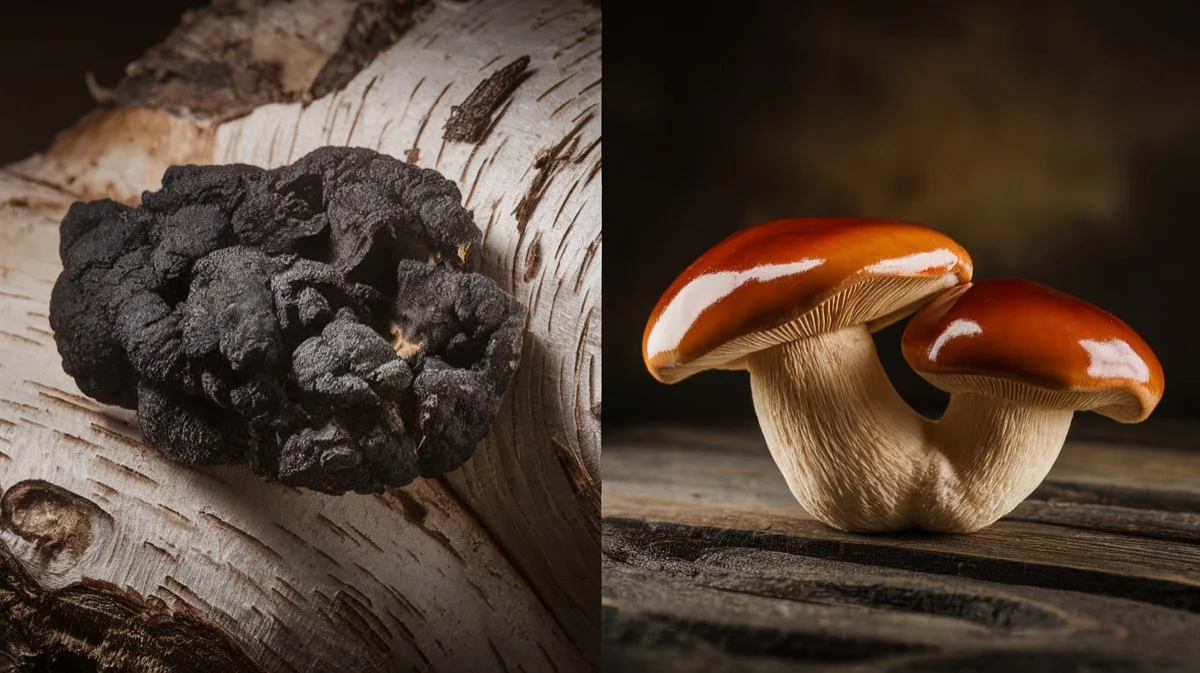
Chaga (Inonotus obliquus) isn't technically a mushroom in the way most people picture one. It's a sclerotium — a dense, hardened mass of mycelium that grows on birch trees in cold northern climates across Siberia, Canada, Scandinavia, and the northern United States. It looks like a chunk of burnt charcoal clinging to a tree trunk, and it can take 15–20 years to mature.
That slow growth is part of what makes chaga special. Over those years, it concentrates an extraordinary density of bioactive compounds, drawing betulin and betulinic acid from the birch bark itself. The result is one of the most antioxidant-rich substances found in nature. See our full chaga profile.
Chaga's Key Bioactive Compounds
- Melanin — The dark pigment that gives chaga its color is a powerful antioxidant that scavenges free radicals and may protect DNA from oxidative damage.
- Betulinic acid — Derived from birch bark, this triterpene has been studied for anti-inflammatory, antiviral, and potential anti-tumor properties.
- Superoxide dismutase (SOD) — An enzyme that neutralizes superoxide radicals. Chaga has one of the highest SOD concentrations of any natural source.
- Beta-glucans — Polysaccharides that bind to immune cell receptors and stimulate innate immune responses.
- Polyphenols — Including various flavonoids that contribute to chaga's overall antioxidant capacity.
What Is Reishi?
Reishi (Ganoderma lucidum) is arguably the most revered medicinal mushroom in history. Called "Lingzhi" in Chinese (meaning "spirit plant" or "mushroom of immortality") and "Mannentake" in Japanese ("10,000-year mushroom"), it has over 2,000 years of documented use in traditional Eastern medicine.
Unlike chaga's rock-like appearance, reishi is a recognizable shelf fungus with a distinctive kidney-shaped cap featuring a glossy, lacquered surface in shades of red, orange, and brown. It grows on hardwood trees in warm, humid climates worldwide — though wild specimens are rare. Most commercial reishi is cultivated. Explore our reishi profile.
Reishi's Key Bioactive Compounds
- Triterpenes (ganoderic acids) — Over 400 identified. These give reishi its bitter taste and are responsible for many of its therapeutic effects, including anti-inflammatory, liver-protective, and anti-histamine activity.
- Beta-glucans — Similar to chaga, reishi's polysaccharides modulate immune function, but through slightly different mechanisms — reishi tends to regulate rather than simply stimulate.
- Peptidoglycans — Protein-bound polysaccharides unique to reishi that contribute to immune modulation.
- Ganodermanontriol — A specific triterpene studied for potential anti-cancer activity.
- Adenosine — A nucleoside that may contribute to reishi's calming, sleep-promoting effects.
Immune Support: Two Mushrooms, Two Approaches
Both chaga and reishi support the immune system, but they do it differently — and understanding the distinction is crucial for choosing the right one.
Chaga: The Immune Stimulator
Chaga primarily works by activating the innate immune system. Its beta-glucans bind to receptors on macrophages, natural killer cells, and dendritic cells, essentially putting them on high alert. Research published in the Journal of Ethnopharmacology has shown that chaga extracts can increase the production of cytokines like IL-6 and TNF-α, which recruit immune cells to fight infections.
Think of chaga as pressing the accelerator on your immune system. It's particularly useful when you need your defenses ramped up — during cold and flu season, after exposure to illness, or when your immune system needs a boost.
Reishi: The Immune Modulator
Reishi takes a more sophisticated approach. Rather than simply stimulating the immune system, it modulates it — turning it up when it's underactive and calming it down when it's overactive. This bidirectional activity is particularly valuable for people dealing with autoimmune conditions, chronic inflammation, or allergies.
Studies in the International Journal of Medicinal Mushrooms have demonstrated that reishi's triterpenes can inhibit histamine release from mast cells, which may explain its traditional use for allergy relief. Simultaneously, its polysaccharides enhance natural killer cell activity against abnormal cells.
Beyond Immunity: Unique Benefits of Each
Chaga's Standout Benefits
Antioxidant powerhouse: Chaga's unmatched antioxidant profile makes it uniquely suited for combating oxidative stress — a root contributor to aging, cardiovascular disease, and neurodegenerative conditions. If you're exposed to environmental toxins, UV radiation, or high levels of physical stress, chaga's free radical scavenging capacity is hard to beat.
Blood sugar regulation: Animal studies have shown chaga may improve insulin sensitivity and lower blood sugar levels. A 2017 study in Biomedicine & Pharmacotherapy found that chaga polysaccharides significantly reduced blood glucose in diabetic mice. Human data is still limited, but the preliminary signals are promising.
Gut health: Chaga acts as a prebiotic, feeding beneficial gut bacteria. Its anti-inflammatory compounds may also help soothe the gut lining, making it interesting for people with digestive issues.
Reishi's Standout Benefits
Sleep and relaxation: This is reishi's superpower and the main reason most people reach for it. Reishi doesn't work like a sedative — it reduces the stress and anxiety that keep you awake. Its triterpenes have been shown to promote non-REM sleep duration in animal studies, and anecdotal reports from users consistently highlight improved sleep quality. Taking reishi 1–2 hours before bed is a common protocol.
Stress adaptation: Reishi is classified as an adaptogen — a substance that helps the body resist physical, chemical, and biological stressors. It modulates the HPA (hypothalamic-pituitary-adrenal) axis, helping normalize cortisol levels. For people dealing with chronic stress, reishi can be genuinely transformative.
Liver protection: Ganoderic acids have demonstrated hepatoprotective effects in multiple studies, potentially helping the liver regenerate and process toxins more efficiently. This makes reishi particularly interesting for people concerned about liver health.
Cardiovascular support: Reishi has shown potential for reducing blood pressure, lowering LDL cholesterol, and improving circulation. Some research suggests it can inhibit platelet aggregation, reducing the risk of blood clots.
Side Effects and Safety Considerations
Chaga Safety Notes
- Oxalates: Chaga is high in oxalates, which can contribute to kidney stones in susceptible individuals. If you have a history of kidney stones, use chaga cautiously and ensure adequate hydration.
- Blood thinning: Chaga may slow blood clotting. Discontinue use at least 2 weeks before scheduled surgery.
- Blood sugar: Can lower blood sugar, which may cause issues for people on diabetes medications.
- Sustainability: Wild chaga is being over-harvested in many regions. Look for sustainably sourced or cultivated options.
Reishi Safety Notes
- Digestive upset: Some people experience nausea, dry mouth, or digestive discomfort, particularly at high doses or with powder forms.
- Liver concerns: While reishi is generally liver-protective, there are rare case reports of liver toxicity with long-term high-dose use. Cycling on and off (e.g., 8 weeks on, 2 weeks off) is a reasonable precaution.
- Blood pressure: May lower blood pressure, potentially causing issues if combined with antihypertensive medications.
- Pregnancy: Insufficient safety data. Generally not recommended during pregnancy or breastfeeding.
Dosage and How to Take Them
Chaga Dosage
For a standardized extract (fruiting body, hot water extracted):
- Powder/capsules: 1,000–3,000 mg daily
- Tincture (dual extract): 2–4 mL daily
- Tea (ground chunks): Simmer 5–10g in hot water for 15–20 minutes
- Best time: Morning or early afternoon — chaga has mild energizing effects
Reishi Dosage
For a standardized extract (fruiting body, dual extracted):
- Powder/capsules: 1,000–3,000 mg daily (higher end for sleep support)
- Tincture (dual extract): 2–4 mL daily
- Tea: 3–5g sliced reishi simmered for 30+ minutes (will be quite bitter)
- Best time: Evening, 1–2 hours before bed for sleep benefits; any time for immune/stress support
Can You Take Chaga and Reishi Together?
Absolutely — and many mushroom enthusiasts do exactly that. Because they work through different mechanisms, chaga and reishi are complementary rather than redundant.
A common protocol:
- Morning: Chaga — for antioxidant protection and immune activation to start the day
- Evening: Reishi — for stress relief, sleep support, and immune modulation overnight
Many multi-mushroom blends include both. If you go this route, make sure the blend lists individual mushroom amounts (not just a "proprietary blend" total) and uses fruiting body extracts. Check our guide to the best mushroom stacks for pre-built combinations.
Quality Matters: What to Look For
Regardless of which mushroom you choose, quality is everything. Here's your checklist:
- ✅ Fruiting body extract (not mycelium on grain)
- ✅ Hot water or dual extraction (not raw powder)
- ✅ Beta-glucan content listed (aim for 20%+ for both)
- ✅ Third-party COA available (learn how to read a COA)
- ✅ No grain fillers — check for "myceliated brown rice" on the label
- ✅ Sustainably sourced — especially important for wild-harvested chaga
Who Should Take What? Decision Guide
Choose Chaga if you:
- Want maximum antioxidant protection
- Are focused on anti-aging and skin health
- Need immune system stimulation (cold/flu season)
- Are looking for blood sugar support
- Want something mild-tasting and easy to add to coffee
Choose Reishi if you:
- Struggle with sleep quality
- Deal with chronic stress or anxiety
- Need immune modulation (allergies, autoimmune concerns)
- Want liver or cardiovascular support
- Are looking for an adaptogen for daily resilience
Choose both if you:
- Want comprehensive immune coverage (stimulation + modulation)
- Are building a full functional mushroom stack
- Have room in your budget and routine for two supplements
The Bottom Line
Chaga and reishi are both outstanding functional mushrooms, but they're not interchangeable. Chaga is your antioxidant shield and immune booster — aggressive, protective, best taken in the morning. Reishi is your calm-down-and-recover ally — modulatory, restorative, ideal for evenings.
If you're only going to pick one, let your primary goal guide you: antioxidants and immune activation → chaga; sleep, stress, and immune balance → reishi. But honestly? Taking both is the move most experienced mushroom supplement users eventually make. They cover different ground, and your body benefits from the full spectrum.
Whatever you choose, prioritize quality. A cheap, poorly extracted supplement of either mushroom is worse than no supplement at all. Check the label, verify the COA, and choose fruiting body extracts. Your immune system will thank you.
How to Stack Them Together
For most people, the answer to "chaga or reishi" is "both, at different times of day." They don't compete — they target different systems and complement each other well.
Morning: Chaga (500-1,000mg with breakfast). Chaga's antioxidant compounds provide general cellular protection throughout the day. The mild taste blends well in coffee. No sedation, no stimulation — it's the background protection layer for your day that most people don't even notice they're getting until they stop.
Evening: Reishi (1,000-1,500mg, 1-2 hours before bed). Reishi's triterpenes have calming, HPA axis-modulating properties that support the cortisol evening decline needed for good sleep. Dual-extracted reishi (alcohol + water) captures both beta-glucans AND ganoderic acids — critical for full therapeutic benefit. Yes, it's intensely bitter. Use capsules or add to honey-sweetened tea to manage the taste issue.
Combined immune protocol: If you're specifically targeting immune support, add turkey tail (1-2g daily) to the stack. Chaga's antioxidant support protects immune cells during activation. Reishi modulates the immune response and prevents inflammatory overreaction. Turkey tail's PSK and beta-glucans directly activate innate immune pathways. The three together cover different dimensions of immune function. See our turkey tail deep dive for clinical background on PSK and why it's the most research-backed functional mushroom for immune support.
Quick Reference: Who Should Take Which
Take chaga if: Antioxidant protection is your priority. You're exposed to environmental stressors. You exercise intensely and want to manage oxidative load. You prefer something mild-tasting that blends into any drink without fighting you.
Take reishi if: Stress management and sleep quality are your priorities. You're dealing with HPA axis dysregulation (chronic stress, burnout). You want immune support with an adaptogenic angle. You're interested in the traditional longevity applications that have the longest documented history of any functional mushroom.
Take both if: You want comprehensive immune coverage. Your goals include antioxidant protection AND stress modulation. You're building a longevity-focused stack. Budget allows for two quality products — both are relatively affordable compared to premium nootropics. Quality options available in our capsules and tinctures categories.
Frequently Asked Questions
Is chaga safe to take every day long-term?
For most people, yes. The specific caution for chaga: oxalate content. Chaga contains high levels of oxalic acid. People with history of kidney stones (particularly calcium-oxalate stones) should limit chaga or consult a nephrologist before regular supplementation. For people with healthy kidneys, this isn't a significant concern at supplemental doses (1-2g/day). This is the one real caution that chaga has that most other functional mushrooms don't share — it's worth knowing about.
Is wild-harvested chaga better than cultivated?
For chaga specifically, wild-harvested from birch trees is the meaningful distinction. Chaga growing on birch accumulates betulinic acid and betulin from the birch bark — compounds unique to birch-hosted chaga that aren't present in chaga grown on other substrates or cultivated differently. The slow 15-20 year maturation on birch creates a specific biochemical profile you can't replicate in a short cultivation cycle. Check that your chaga specifies wild-harvested from birch, and pay attention to sustainable sourcing — overharvesting wild chaga is a real concern in some regions.
Why does reishi taste so bitter and does that mean it's working?
The bitterness comes directly from ganoderic acids — the compounds responsible for reishi's adaptogenic, anti-inflammatory, and immune-modulating effects. More bitter = higher triterpene content = more potent product. If your reishi supplement tastes like nothing, it has minimal triterpene content (probably water-only extracted, probably low quality). The intensely bitter taste is your natural quality indicator. Real dual-extracted reishi turns warm water dark brown and tastes aggressively bitter. Mycelium-on-grain reishi is pale and mild. Let your taste buds be your first quality screen.
Can chaga cure cancer?
No. Chaga contains compounds (particularly betulinic acid) that have shown cytotoxic effects in laboratory cell cultures and some animal models. That's significantly different from clinical efficacy in treating human cancers. No high-quality randomized controlled trials exist testing chaga against cancer in humans. Turkey tail has the strongest oncology evidence among functional mushrooms. Chaga's real value for immune support and antioxidant defense is legitimate and backed by research — but the cancer cure language is not supported by clinical evidence and is harmful if it leads people away from proven treatments.
How do I know if my reishi is dual-extracted?
Check the label for "dual extraction" or "dual extract." If it says "hot water extract" only, it's likely water-only — captures beta-glucans but not triterpenes. A practical home test: dissolve a small amount in 90-proof vodka. Real dual-extracted reishi darkens the alcohol as ethanol-soluble triterpenes dissolve out. Water-extracted powder stays mostly suspended without significantly coloring alcohol. This is imperfect but gives directional information when you can't get a direct COA answer from the brand.
The Evidence Summary: Where Each Species Stands
Let me consolidate the research evidence for each species into a clear summary before the conclusion.
Chaga evidence summary: Strong preclinical evidence (cell cultures, animal models) for antioxidant, anti-inflammatory, anti-tumor, antiviral, and immunostimulatory effects. Limited but promising human clinical data. The ORAC antioxidant value is independently verified and extraordinary. The SOD content is documented. The betulinic acid content in birch-harvested specimens is well-characterized. What's missing: large, well-controlled human RCTs for specific health outcomes. The research gap isn't evidence against chaga — it's evidence of how far clinical research has to catch up with traditional use and preclinical science.
Reishi evidence summary: More human clinical data than chaga, primarily in the areas of fatigue, quality of life in cancer patients (adjunctive use), cardiovascular risk factors (cholesterol, blood pressure), and sleep quality. The adaptogenic HPA axis effects have been characterized in both animal models and human studies. The triterpene mechanisms (ganoderic acids) are well-understood at the molecular level. The safety data from decades of Japanese pharmaceutical PSK use provides strong long-term safety evidence. The limitation: effect sizes in healthy populations tend to be modest — reishi shines most clearly in people dealing with actual health challenges (stress, chronic fatigue, sleep disorders) rather than as a performance enhancer for people already at optimal baseline.
Bottom line for choosing between them: If you're dealing with chronic stress, burnout, poor sleep, or want the adaptogenic angle — start with reishi. If your primary concern is environmental antioxidant protection, immune defense, or you exercise intensely and want cellular protection — start with chaga. If you're serious about functional mushroom supplementation and want comprehensive coverage — run them simultaneously at the timing recommendations above. Both are safe, both are well-supported by the available evidence, and neither is a waste of money if you're buying quality verified products from reputable brands. Find options in our capsules category and explore in-person options at a quality headshop near you.
Tags
Medically Reviewed By
Dr. Igor I. Bussel, MD
Board-certified physician affiliated with the University of California, Irvine (UCI), the Gavin Herbert Eye Institute, and the UCI School of Medicine.
Related Articles
Mushroom Coffee: Benefits, Side Effects, and Whether It's Worth the Hype
12 min read
Best Time to Take Mushroom Supplements: A Species-by-Species Timing Guide
10 min read
Turkey Tail Mushroom Benefits: The Science Behind Nature's Most Researched Immune Supplement
11 min read
⚖️ Product Comparisons
Explore the Mushroom World
Dive deeper into species profiles, compare products, and find stores near you.